53 mowers · 21 brands · 41 wire-free · $299–$5,999 · updated September 2026
Robot mower specs, and the complaints that come with them
The rated lawn size is the number on the box. Navigation type, slope rating, cut height, and how the thing behaves under your trees are the ones that decide whether it mows your yard or sits in the garage waiting for a signal. Every mower here carries all of them, plus the drawbacks owners keep reporting.
Every mower we track
Filter by brand, navigation type, the lawn size it’s rated for, or price. Tick the checkbox on up to three mowers to put their spec sheets next to each other.
53 mowers found
TerraMow
TerraMow V1000
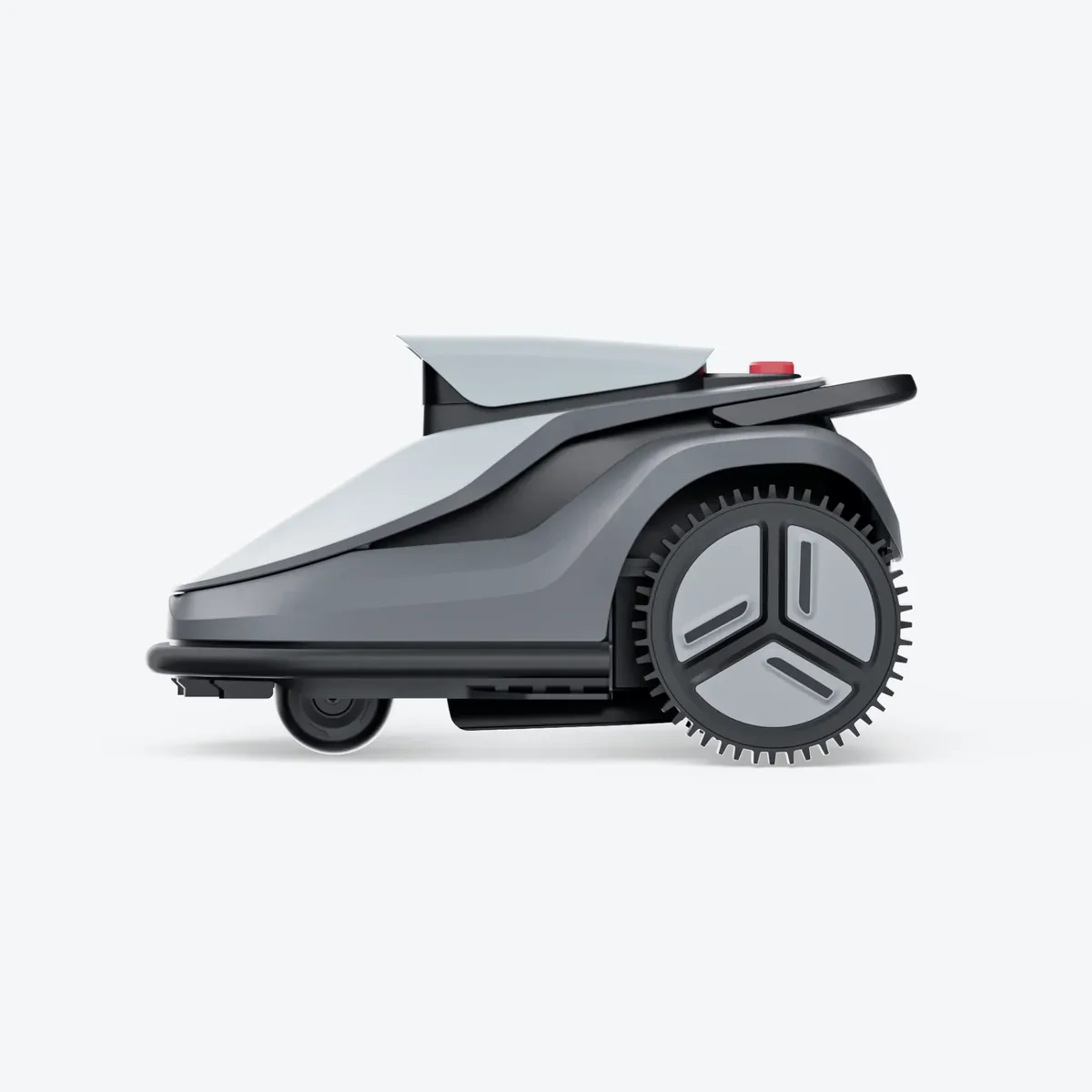
TerraMow is a vision-only brand that built a strong following in Europe first and now sells in the US mainly through Amazon and a couple of dealers, since the US variant on its own store is often sold out. The V1000 is the sweet spot of the range: it maps a lawn up to about 1,200 square meters (0.3 acre) by itself using three cameras and a 3D vision system, with no wire, no RTK antenna and no beacons, and the map lives on the mower so it keeps working if your Wi-Fi drops. It is small at 26 pounds, very quiet at under 54 dB, and cuts an 8-inch swath from 1 to 3 inches, with an edge mode, 20 zones and a 4G module whose first year of data is included. Owners on TerraMow's site, including a US buyer with a 5,500 square foot shared front lawn, talk about auto-mapping working on the first try and using virtual fences to keep it off the neighbors' grass; the recurring gripe is wanting more manual map editing for awkward corners. Limits: a 33 percent slope rating, a 4.5 Ah battery that covers only 160-300 square meters per charge, and a vision system that needs daylight, so no night mowing. Against the Eufy E15 or Worx Landroid Vision it is cheaper, quieter and handles complex layouts well; against a Segway Navimow i105 you give up RTK precision for a truly no-antenna setup.
Hookii
Hookii Neomow X
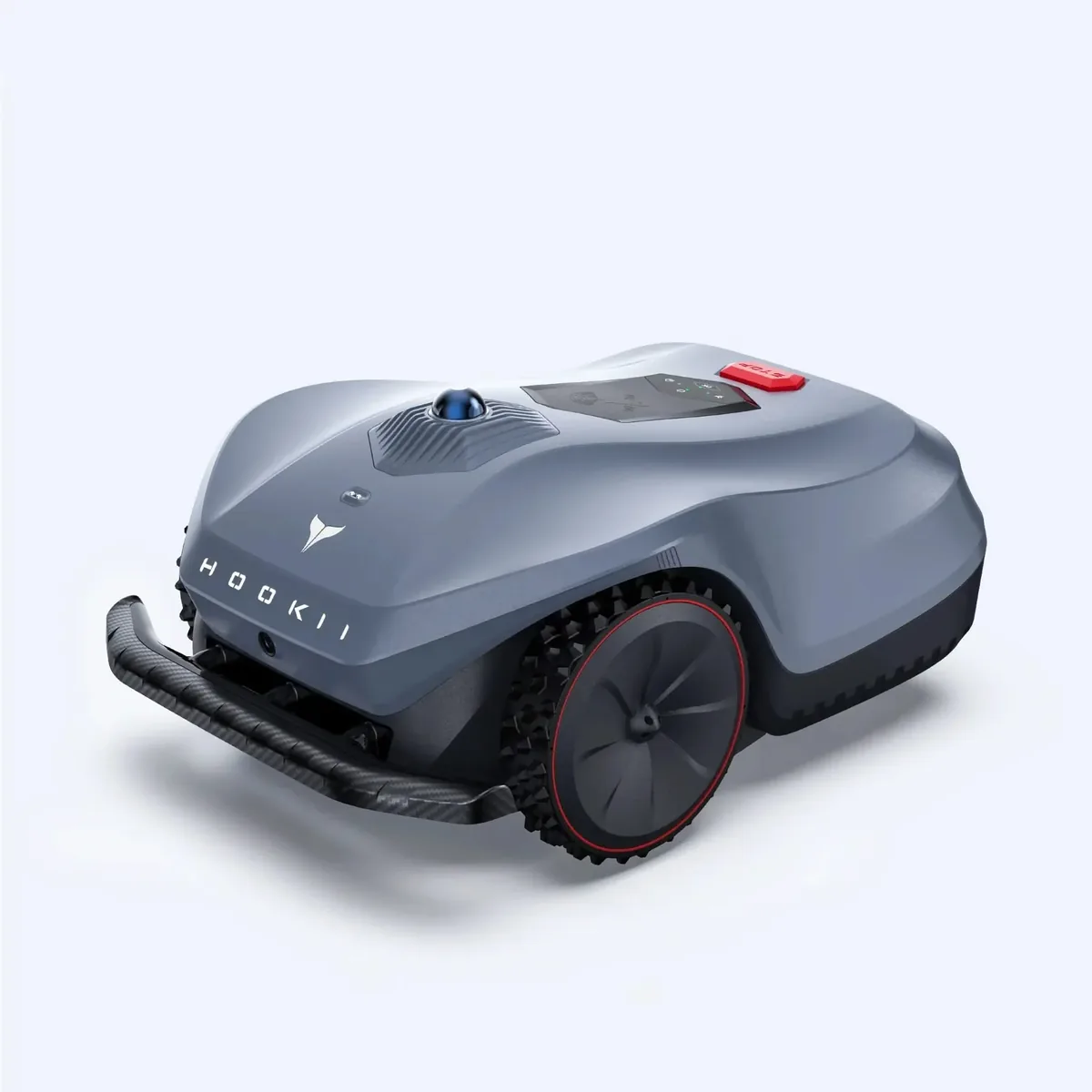
The Neomow X was one of the first consumer mowers to put a spinning 3D LiDAR on the roof, the same idea Dreame and Ecovacs later adopted, and it still holds up: no boundary wire, no RTK antenna to find sky for, and it navigates under dense trees and at night because it does not depend on satellites. You drive it around the lawn edge once (about 45 minutes for a quarter acre per The Gadgeteer), then it mows in tidy parallel lines at under 60 dB. Three trims share one body: the X LE (0.37 acre, $1,799), the X (1 acre, $2,599) and the 17.5 Ah X Pro (1.5 acres, $2,899), and a newer Neomow X2 line with triple-camera auto-mapping now sits alongside it at similar prices. Hands-on reviewers at SmartHomeScene, The Gadgeteer and EasyLawnMowing all liked the cut and the app, and early owners on Hookii's site say it copes with clay, holes and dogs without getting stuck. Known weaknesses: it leaves about 2 inches uncut at hard edges, it is front-wheel drive so it slips on damp slopes well under its 45 percent rating, docking contacts can be finicky on uneven turf, and the camera half of the obstacle system is weaker in the dark. North American stock comes and goes, so check availability before you fall in love. If your yard is tree-covered and RTK mowers keep losing signal, this is the fix; if you want the tightest edges, look at a Segway Navimow with its edge blade.
Mammotion
Mammotion Luba mini 2 AWD
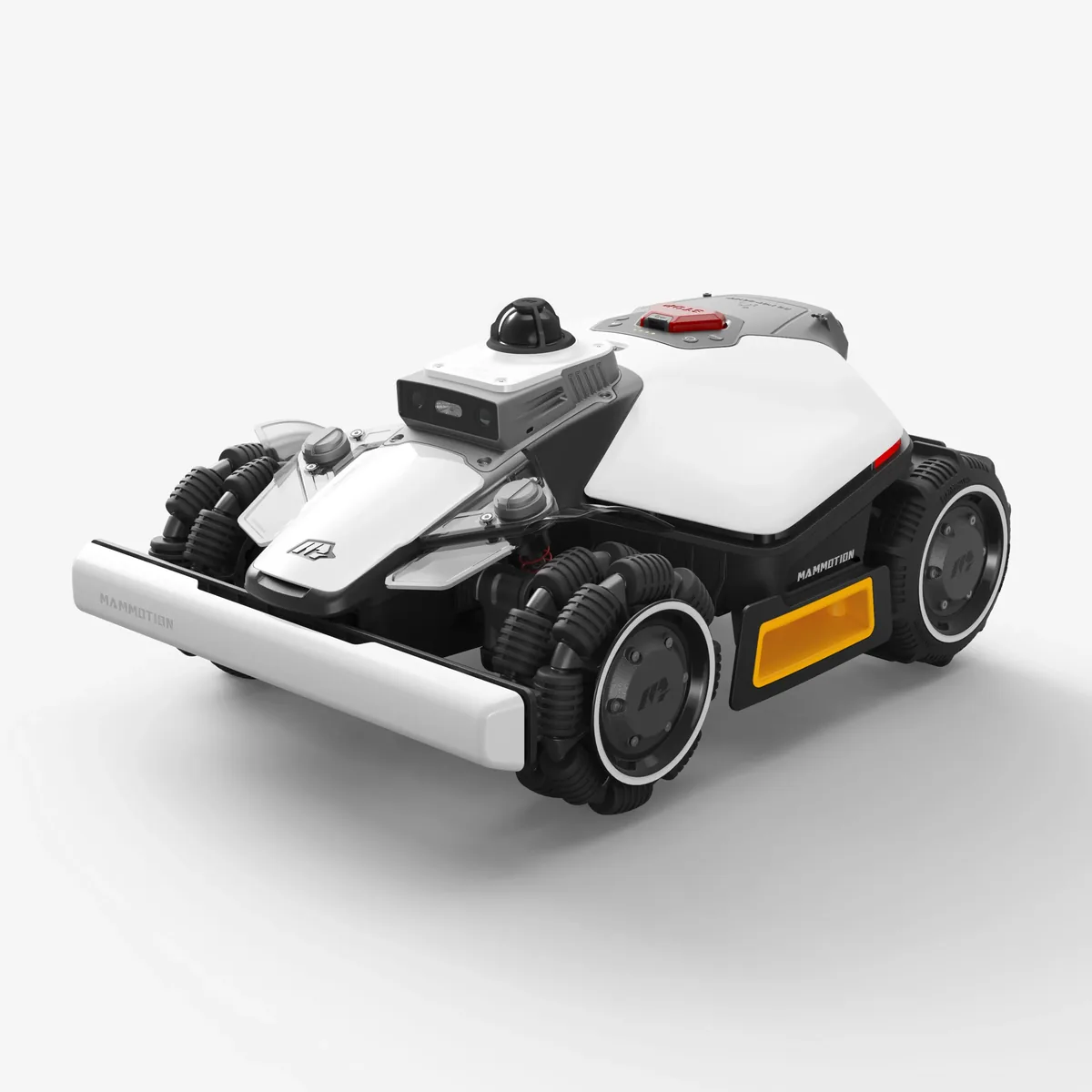
Think of the Luba mini 2 AWD as the Luba 3's tech shrunk to fit a third-acre suburban lot. It replaced the original Luba mini AWD in spring 2026 (that one is now out of stock at Mammotion) and swapped NetRTK-only positioning for a 360-degree LiDAR dome plus two AI cameras, so it no longer cares whether your yard has open sky. It keeps the four hub motors that let it climb 80 percent grades, and it adds something the big Lubas lack: a second, fixed 4.7 inch edge disc that trims within about 2 inches of walls and beds, which owners say cut their string-trimmer time way down. The main deck is only 7.8 inches, so it is slower per pass than a Luba 3, but 150 minutes of runtime covers a 0.37 acre lawn in a session or two. Owners who came from wire mowers rave about the setup and the finish, and the complaints are the fixed 2.6 inch height of the edge disc, a learning curve on multi-zone mapping, and wheels that occasionally spin on a wet hill. In the US only the 1500 size is sold, with the H version (2.2 to 4.0 inch cut) at $1,699 on sale. Compared with a Segway Navimow i110 you pay more but get AWD and LiDAR; compared with a Yuka mini 2 you get hill-climbing traction. Best for hilly, obstacle-heavy yards up to 0.37 acres.
Mammotion
Mammotion Yuka mini
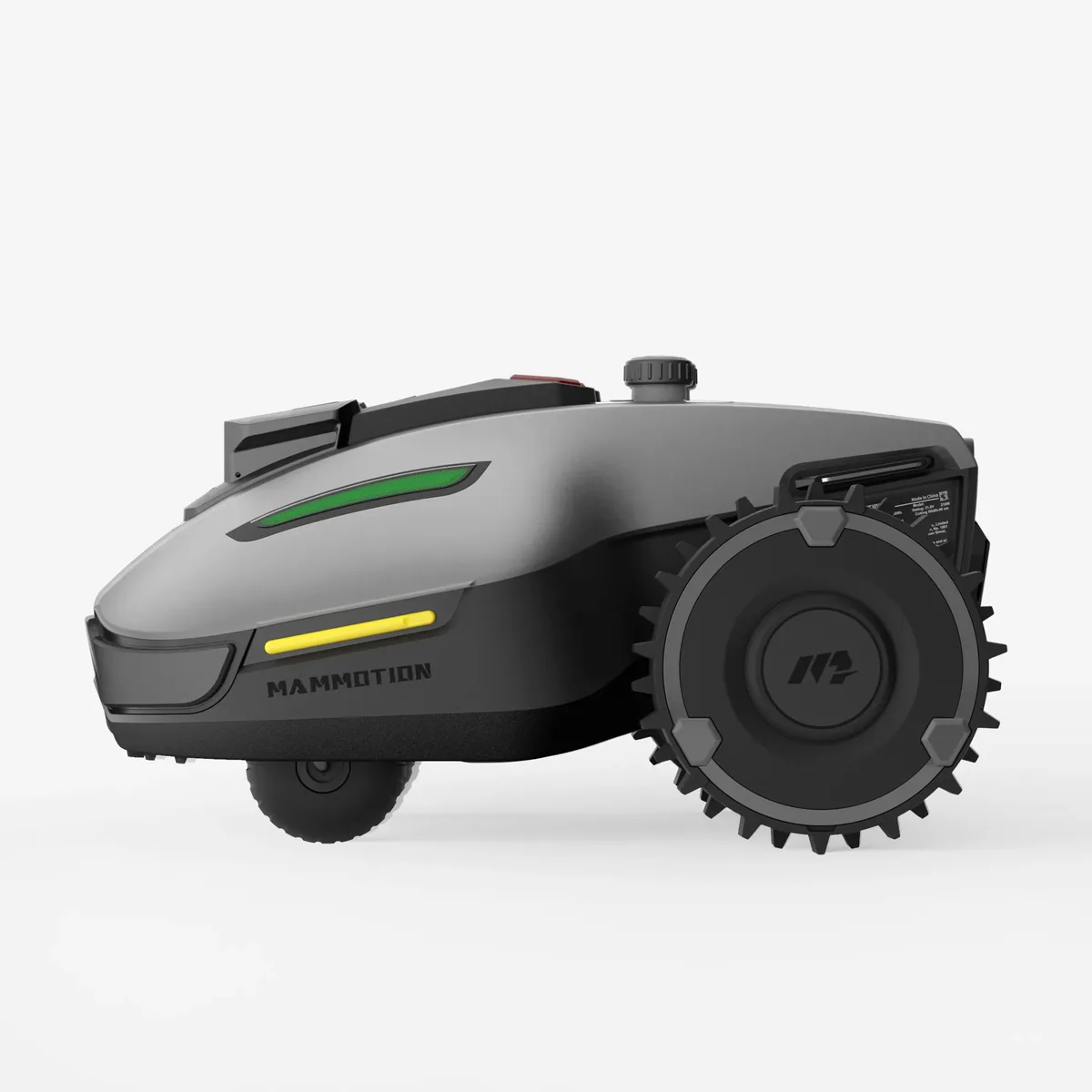
The Yuka mini is the cheapest way into a wire-free, station-free robot mower from a brand with a real support desk, and at $749 for the 600H (or about $949 for the 800H at Home Depot) it undercuts the Navimow i105 while still carrying a 3-year warranty. There is no RTK antenna: it pulls free NetRTK corrections over your Wi-Fi and leans on two front cameras to track the grass edge, which is why it auto-maps a small yard in ten minutes. It is a 23 pound, rear-drive machine with a 7.5 inch disc and a 2.0 to 3.5 inch cut, rated for 50 percent slopes, though owners with bumpy or sloped yards say the front caster and lift sensor trip constantly and they end up rescuing it. On flat lawns under a fifth of an acre owners are happy: quiet, tidy stripes, and they like that it stays in bounds even where GPS is weak. Weak points are an app that lacks polish, cautious behavior around tree trunks that leaves rings of long grass, no built-in 4G (a $129 module adds it) and a 2 inch minimum height that rules out a tight cut. Mammotion has since released the LiDAR Yuka mini 2 at $1,399, so this is the value play. Best for flat, simple yards up to 0.2 acres and first-time robot owners.
Anthbot
Anthbot Genie
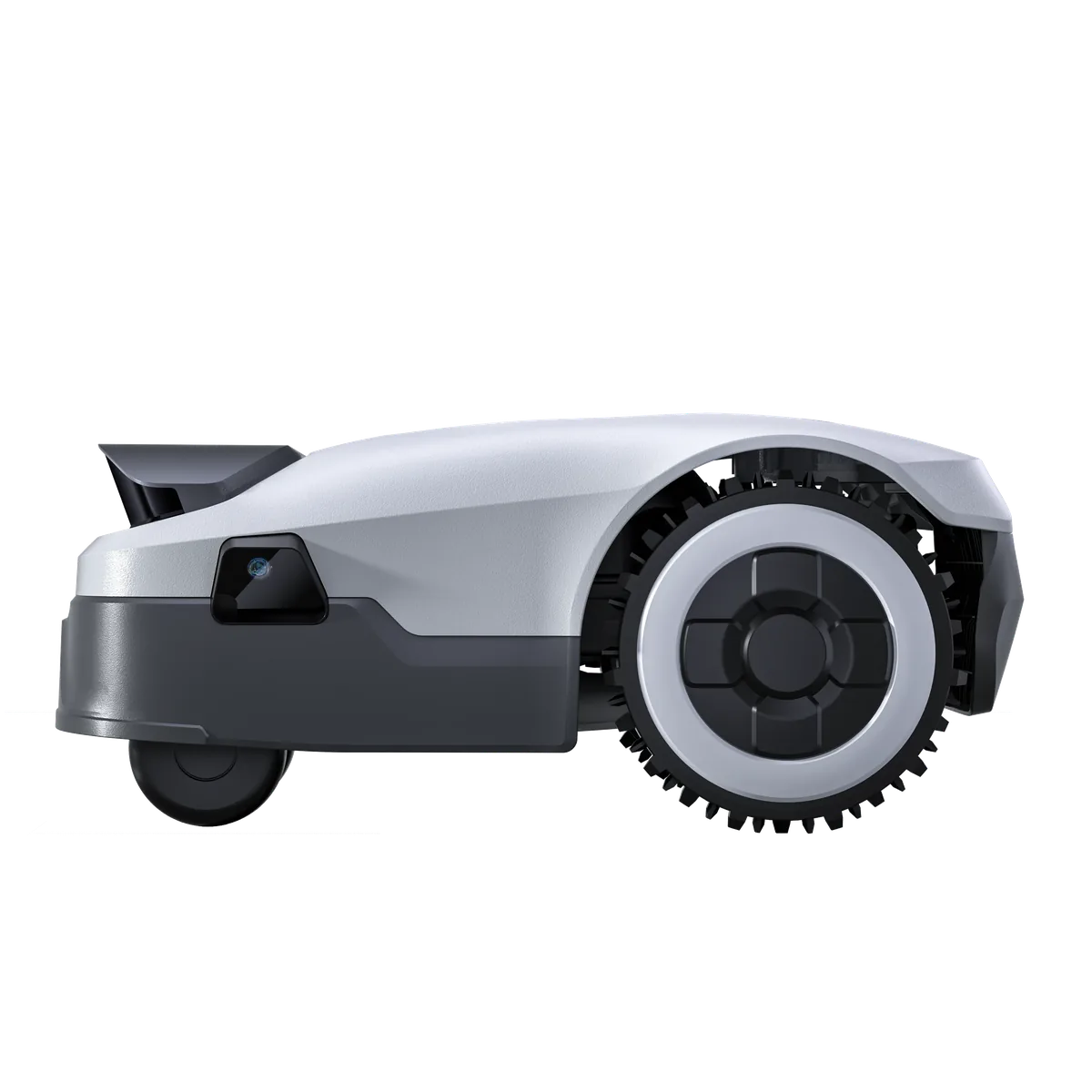
The Anthbot Genie started as a Kickstarter in 2024 and has settled into the role of the budget RTK mower that actually works on a plain lawn. In fall 2026 Anthbot sells the 600e for $699, the 1000 for $799 and the 3000 for $899 direct, which is less than half of what Mammotion or Roborock charge for similar coverage, and the 3000 is rated for up to 0.89 acres. The hardware is modest: a 7.9 inch disc, 1.2 to 2.8 inch app-set height, rear-wheel drive and a 45 percent slope rating, but the 10 Ah battery in the 3000 runs about four hours, it is one of the quietest mowers at 58 dB, and an included RTK antenna plus four cameras handle positioning and obstacles. Owners who set the antenna in open sky say mapping was easy, the stripes look professional and it handles multiple zones well; the negative reviews are the flip side, describing RTK dropouts near houses, a stubborn firmware update at first setup, over-cautious stops for leaves, and a unit that degraded badly in its second season with slow support. The narrow deck means a large yard takes two passes to look finished. It competes with the Navimow i105 on price while covering far more ground, and the Yuka mini beats it on setup simplicity. Best for budget buyers with flat, open lawns up to three-quarters of an acre.
Lymow
Lymow One Plus
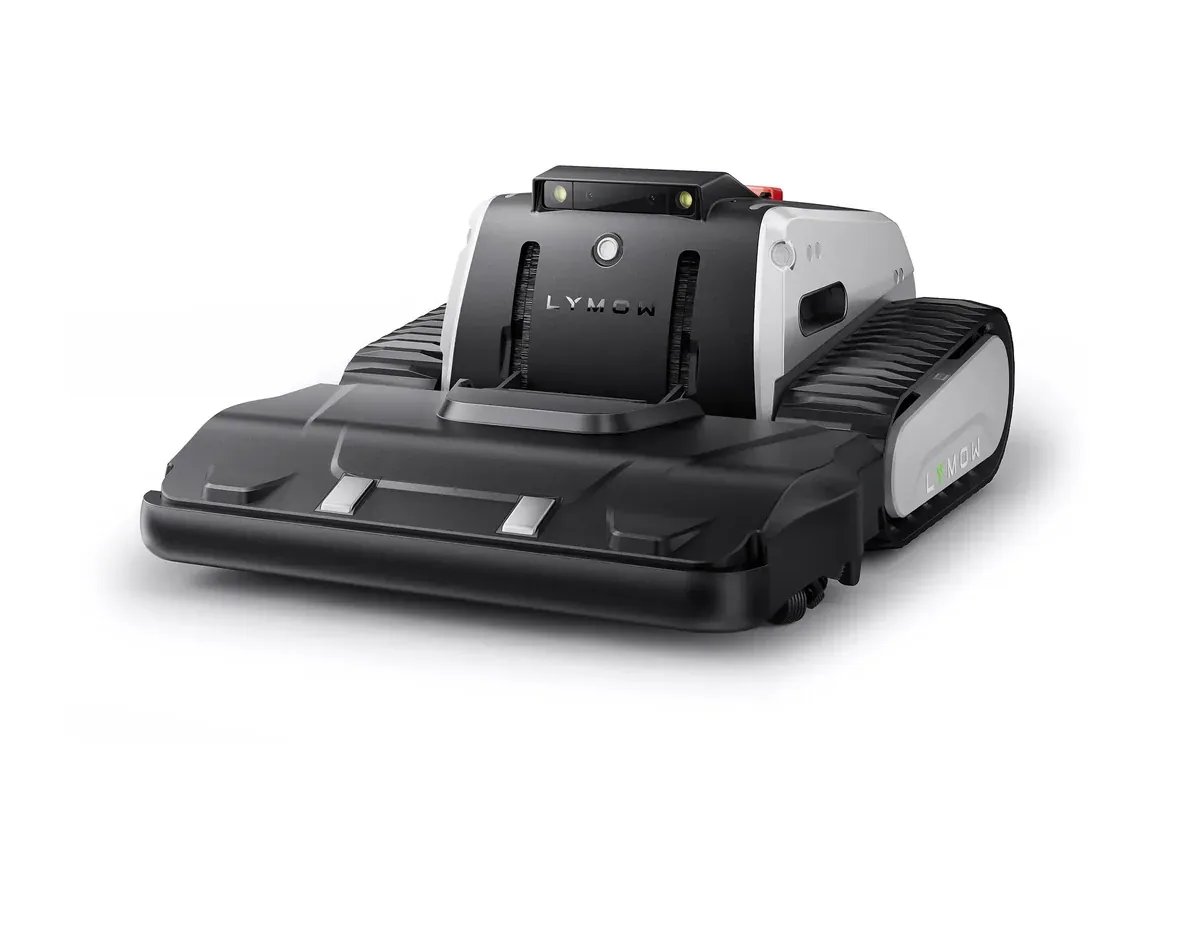
The Lymow One Plus is the tank of the robot mower world: it rides on rubber tracks instead of wheels, weighs almost 80 pounds, and swings two SK5 steel rotary blades across a 16-inch deck at up to 6,000 rpm. That combination is why it climbs a rated 45-degree (100 percent) slope and chews through tall, thick grass and fall leaves that stall a disc-blade mower like the Mammotion Luba 2 or a Segway Navimow. It replaced the original Lymow One in 2026 with about 50 percent more cutting power, a 528 Wh LiFePO4 battery good for roughly three hours, and a 90-minute fast charger on the 10A kit (the cheaper 5A kit takes about 150 minutes). Navigation is RTK plus VSLAM cameras, so the included RTK antenna needs open sky, then you drive the perimeter in the app to build up to 80 zones. The trade-offs are real: it is louder than a typical robot (about 62 dB in standard mode, 74 dB in turbo), it is not built for tight, fussy edges, and owners on Lymow's own site mention occasional offline drops and RTK hiccups that firmware updates have been chipping away at. If you have an acre or more of rough, hilly ground and were about to buy a small riding mower, this is the robot to look at. If your lot is a flat quarter acre full of beds, a lighter wheeled mower does the job for less.
Airseekers
Airseekers Tron
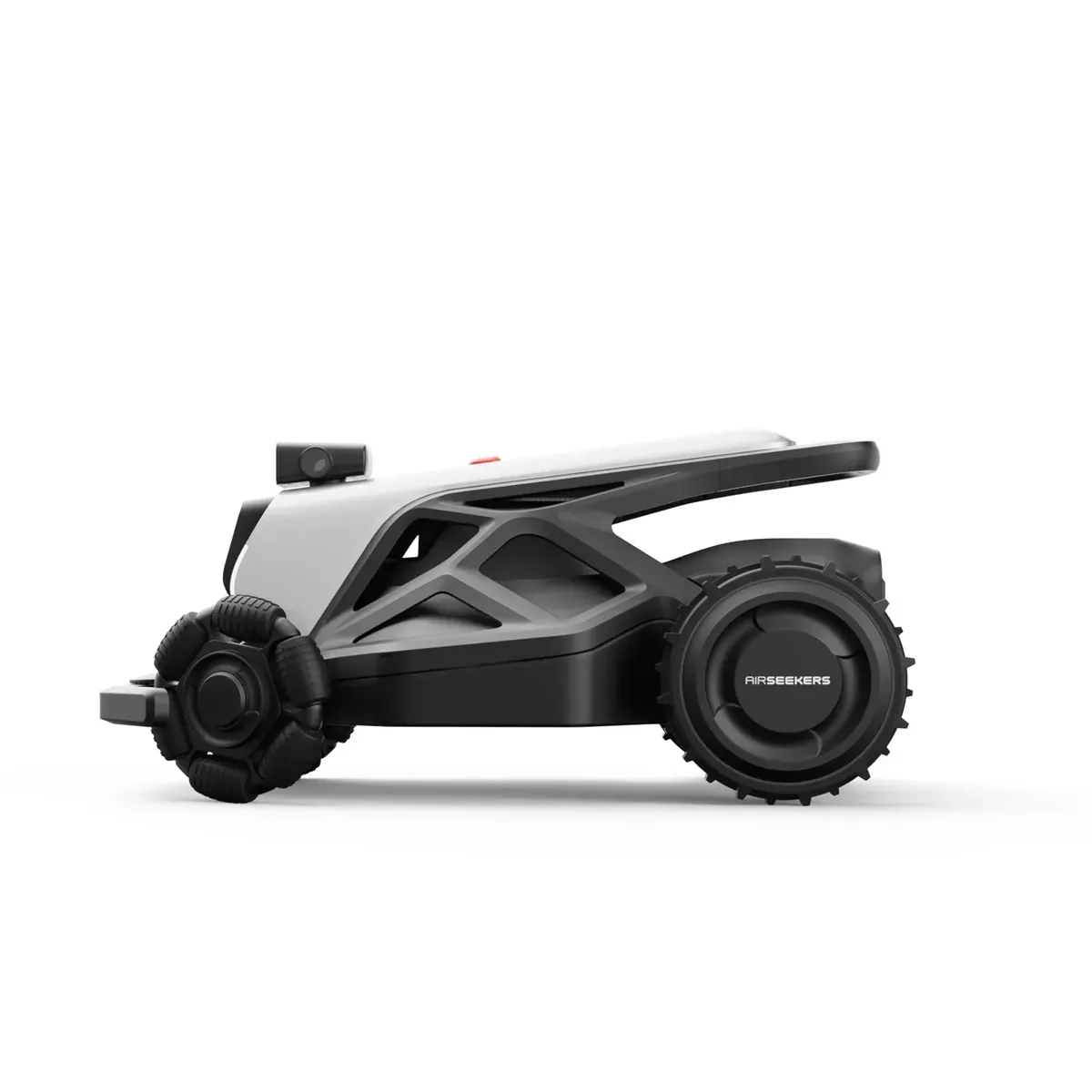
Airseekers came out of a 2024 Kickstarter with a genuinely different idea: instead of a bare disc of razor blades, the Tron uses a six-blade FlowCut deck that pulls grass upright with airflow, cuts it, and mulches it again before spreading it back onto the lawn. Reviewers at Android Authority and The Gadgeteer agreed the cut and mulch quality are excellent and that the 65 percent slope rating is real. It is also one of the cheaper wire-free mowers with 4G built in: the base Tron is regularly $1,299 for 0.59 acre a day, the Tron Plus is $2,099 for a full acre and adds LED headlights, and both share a swappable 15 Ah battery that runs about three hours, with an optional wider 11.8-inch blade disc. The weak spots are just as well documented. The toed-in front wheels can leave wavy tracks and scuff turf on tight turns, small objects below the bumper (sticks, bricks, hose) get run over, and owners on Airseekers' own site describe RTK signal fiddling, 4G that took weeks to activate, and a mower that digs itself in on dry, sandy soil. Firmware updates have smoothed navigation, but this is still a mower for open, fairly tidy lawns rather than obstacle courses. Compared with a Eufy E15 at a similar price, the Tron cuts and climbs better but needs more babysitting; a Mammotion Luba 2 costs more and forgives more.
Yarbo
Yarbo Lawn Mower Pro
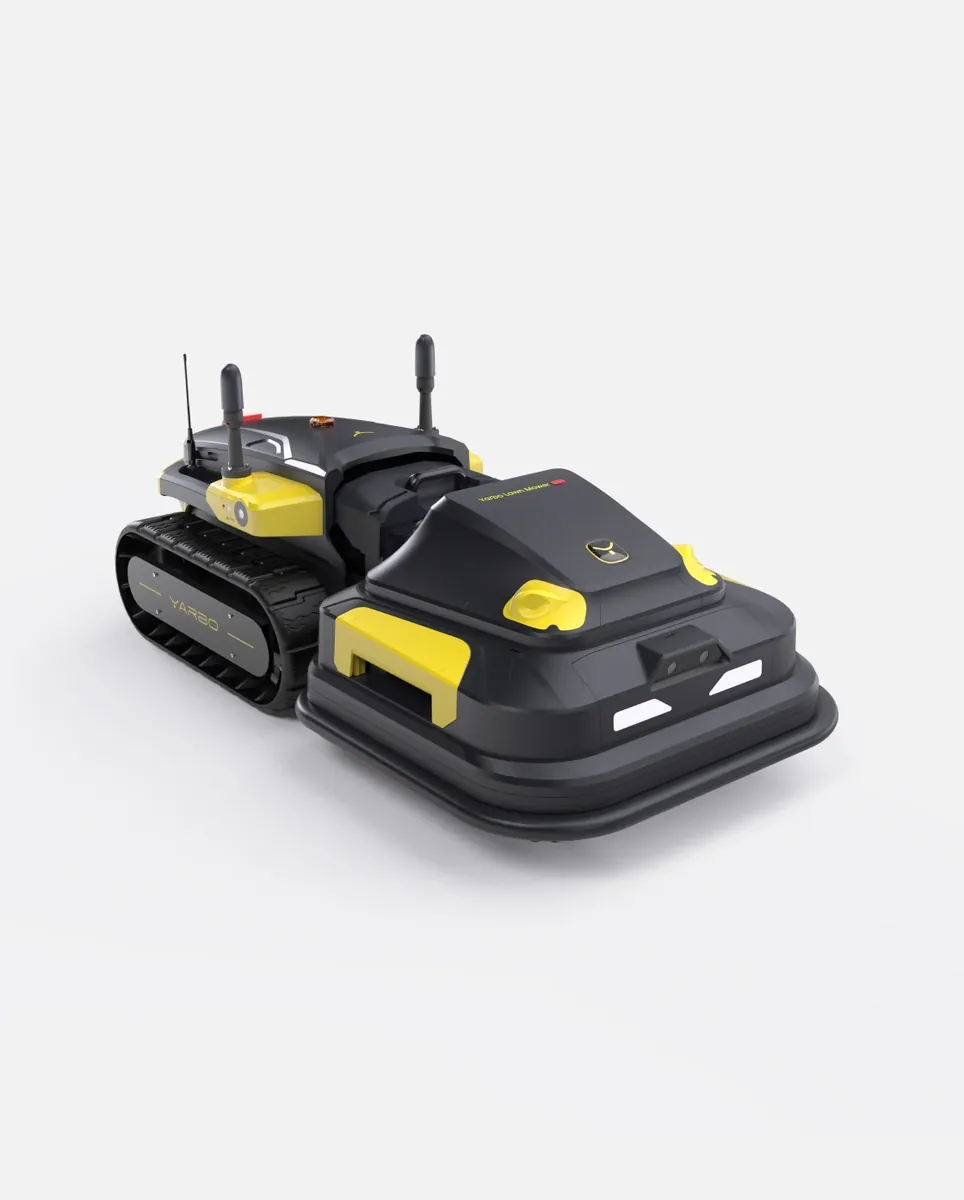
Yarbo is not really a robot mower; it is a tracked yard robot (the Y40 Core) that you bolt attachments onto, and the Lawn Mower Pro module is the mowing one. The Core climbs a 70 percent grade, carries a 1.38 kWh battery, and can tow 500 pounds; swap the module and the same robot blows snow or clears leaves. The Pro module, which replaced the original 150 W mower in Yarbo's store, spins two 300 W motors under a 20-inch deck with straight blades, cuts down to 0.8 inch, runs about two hours per 90-minute charge, and is rated for up to 6 acres. At $5,999 for Core plus module it is the most expensive consumer mower here, and Reviewed's tester spent about eight hours on setup, including placing the RTK Data Center antenna and mapping. Owners on Yarbo's site love the cut and how quiet the Pro is, and several say it finally mulches leaves under big maples, but the same threads include a season lost to troubleshooting and repairs, and the 70-pound module is a genuine two-person lift. Compared with a Mammotion Luba 2 AWD 5000 at about half the price, you are paying for the modular platform and the snow blower, not better mowing. Best for big, open, rural lots that also get snow; wrong for a tight suburban yard, where an Ecovacs GOAT A3000 or Luba does the job with far less setup.
Dreame
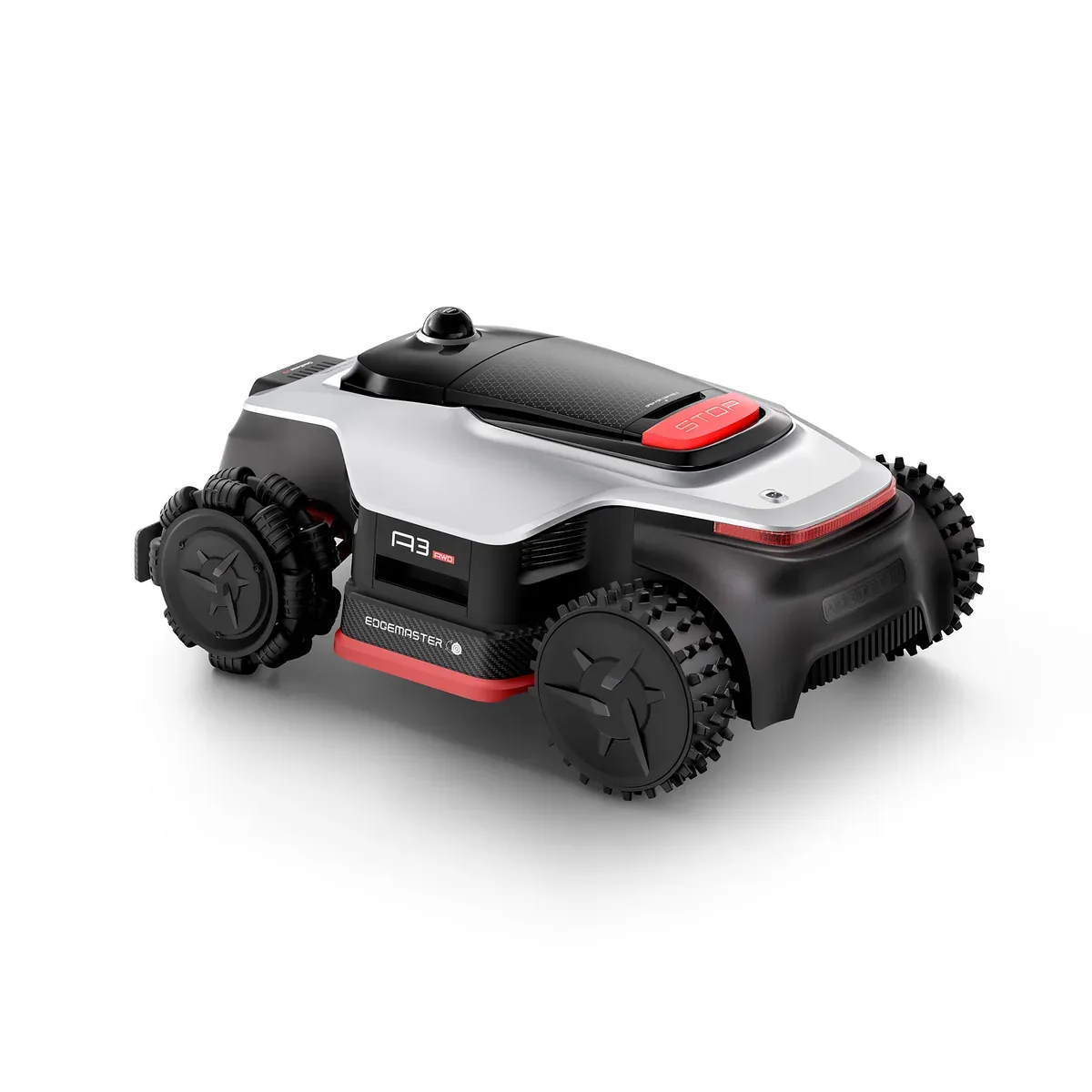
Dreame A3 AWD Pro
The A3 AWD Pro is the mower Dreame wants you to think of as a Mammotion Luba 2 AWD without the RTK antenna. OmniSense 3.0 pairs a roof-mounted 360-degree 3D LiDAR with binocular AI cameras, so it maps most yards on its own and keeps working under trees and beside buildings where satellite mowers lose signal. Four hub motors, omni front wheels and knobby rear tires carry it up 80% (38.7-degree) slopes and over 2.2-inch bumps, and a 15.8-inch dual-disc deck with the EdgeMaster 2.0 sliding blade gets within about 1.2 inches of borders. The 2500, 3500 and 5000 versions share one body and differ in battery (5, 7.5 and 10 Ah) and coverage; the 2500 is regularly $2,249.99 on Dreame's site against a $3,099.99 list. Gizmodo's 3.5/5 review and Android Authority's hands-on both loved the slope handling and the setup but flagged unpolished software, spotty Bluetooth pairing and, more seriously, AWD spin-turns that carve ruts and a bald patch near the dock on uneven ground. Owners on Dreame's store (4.4 stars) and Amazon echo the split: some say it handles a 45% hill and flower beds better than anything they have tried, others report a stuck rear wheel, a dead PIN dial or missed strips out of the box. It is a big, heavy machine at 52.7 lb. Best for steep, complex lots from half an acre up where an RTK antenna is not an option and you can accept some early-adopter friction.
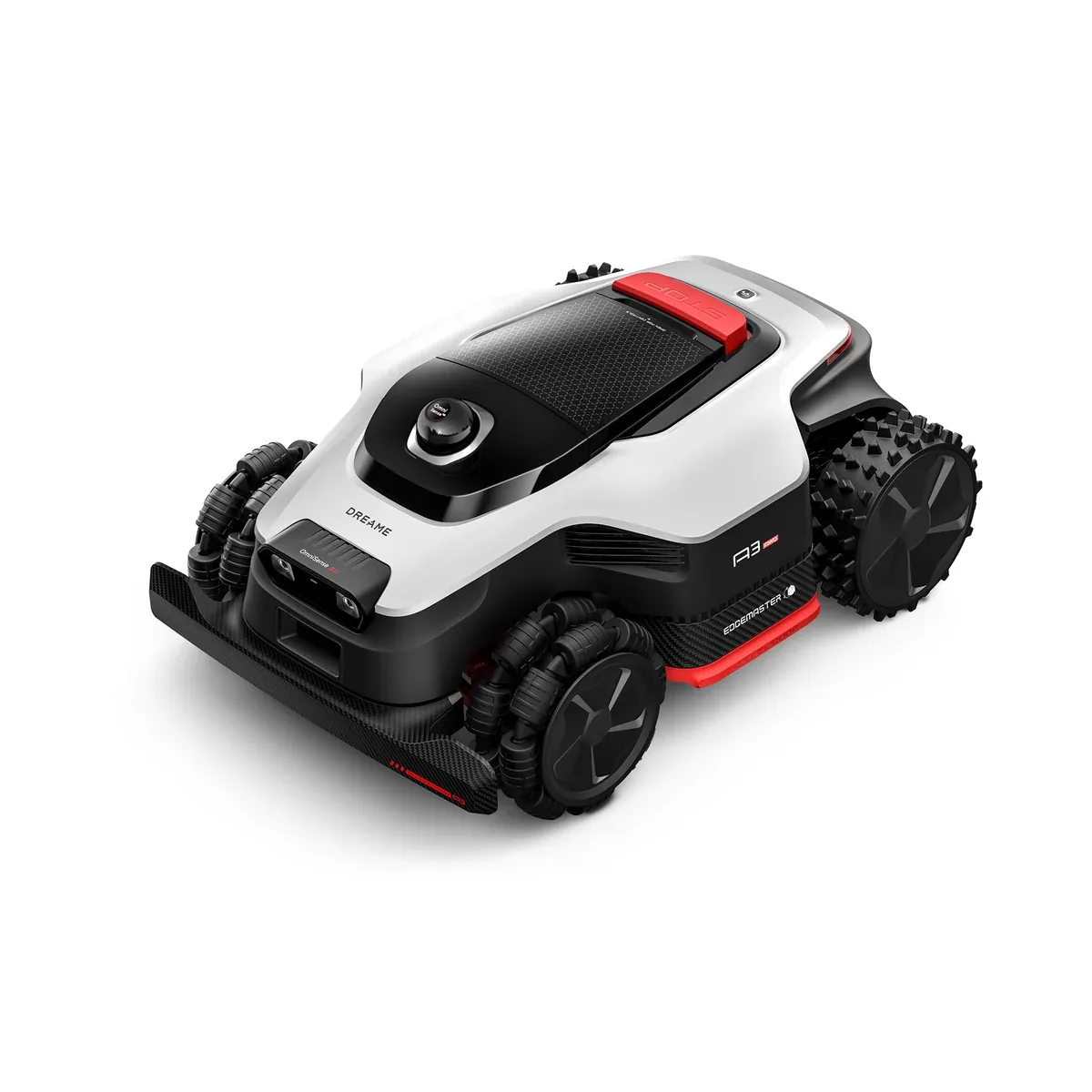
Dreame
Dreame A3 AWD
The A3 AWD is Dreame's real entry into the US market after the A1, A1 Pro and A2 stayed in Europe, and it is the cheapest all-wheel-drive, no-RTK mower you can buy from a major brand. It shares the OmniSense 3.0 stack with the A3 AWD Pro: a 360-degree 3D LiDAR on the hood plus binocular AI cameras that map the yard on their own and recognize about 300 obstacle types. Four hub motors and knobby rear tires give it an 80% (38.7-degree) slope rating that leaves rear-drive rivals like the Ecovacs GOAT O1000 LiDAR Pro and Segway Navimow i110N far behind. It comes as a 1000 (0.25 acre, $1,599.99 on sale from $1,999.99) or 2000 (0.5 acre, $1,899.99) that differ only in battery and coverage. The trade-off versus the Pro is a single 7.9-inch disc rather than dual 15.8-inch discs, so it covers ground slowly, and the EdgeMaster sliding disc leaves under 1.9 inches at borders instead of 1.2. Reviews on Dreame's store are strong (4.3 stars) and owners praise the AWD for not getting stuck in bumpy yards, but Amazon owners are harsher: a weed a few inches tall can register as an obstacle, mapping takes several tries, the dock tower can pop apart, and support has been slow. Built-in 4G with three free years, an AirTag slot and a 3-year warranty sweeten it. Best for hilly or lumpy lots under half an acre where slope matters more than speed.
Mammotion
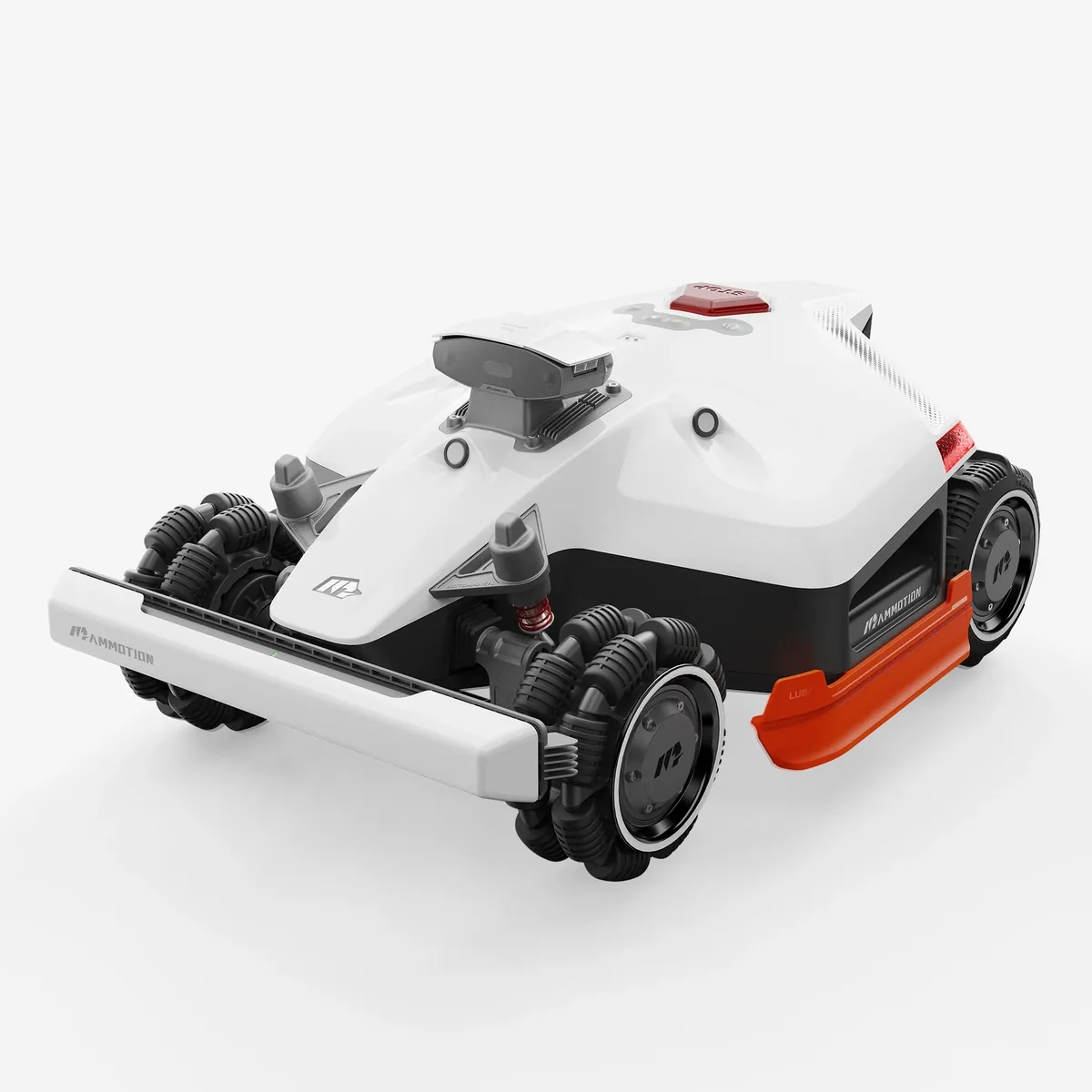
Mammotion Luba 2 AWD X
The Luba 2 AWD X is the mower that made Mammotion a household name in the US, and in fall 2026 it is a clearance buy: Mammotion's own store shows every trim out of stock with a banner pointing at the Luba 3, but Home Depot and Best Buy still have units, with the 3000X down from $2,599 to about $1,999. What you get is the same all-wheel-drive body that climbs 80 percent grades, a 15.7 inch dual-disc deck that clears a big yard fast, and a 2025 X refresh that added the UltraSense AI camera so it keeps its bearings when the RTK station loses sky. The catch is that RTK station: it must be mounted high with an open view, and most owner complaints trace back to a poorly placed antenna. The X version cuts 1.0 to 2.7 inches, so northern cool-season lawns should look for the HX (2.2 to 4.0 inches) instead. Versus the newer Luba 3 you give up LiDAR and free NetRTK, which matters if your lawn is ringed by trees; versus a Segway Navimow X3 you gain real AWD and a wider deck. Best for hilly half-acre to 2.5 acre properties with decent sky, bought on discount.
Husqvarna
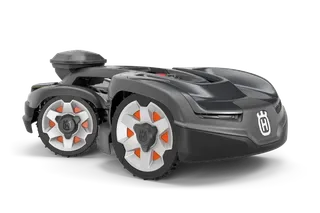
Husqvarna Automower 435 iQ AWD
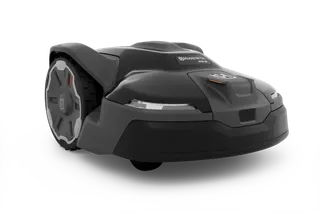
This is the mower for the yard that scares other robots: the 435 iQ AWD pairs all-wheel drive and an articulated, pivoting rear body with Husqvarna's EPOS wire-free navigation, and it is rated for 70 percent slopes, roughly 35 degrees, on up to 1.3 acres. Owners on Husqvarna's site describe steep waterfront lawns and ditches they used to mow in cleats now being handled without a wire in the ground, and the few complaints are about tall landscape edging confusing it and slow satellite lock rather than traction. The cut is narrower than the 4-series at 8.7 inches with a 1.2-to-2.8-inch height range, so it is not the pick for tall cool-season grass, and ultrasonic sensors rather than radar handle obstacles. At $5,000 it is the most expensive residential Automower and roughly double the price of a Mammotion Luba 2 AWD 5000, which also climbs hills and cuts wider. What you are paying for is the dealer network, a four-year warranty, and a chassis that has been proving itself on hilly lawns since the 435X AWD debuted in 2019. If your slopes are under 45 percent, save money with a 420 iQ; if they are not, this is the safest bet in the category.
Husqvarna
Husqvarna Automower 410 iQ
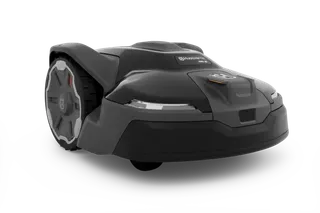
The 410 iQ is the entry point to Husqvarna's wire-free lineup, and it is the one to look at if your lawn is a straightforward half acre with open sky. It navigates with EPOS RTK satellite positioning from an RS1 reference station you mount on the house, so there is no perimeter wire to bury, and it can still fall back to a physical wire in a shaded side yard where the signal drops. Radar handles obstacle slowdown, but owners are clear that it will still shove a stray branch around, so you tidy the yard first. The cut is the classic Husqvarna razor-blade mulch that leaves a fine finish, and it runs at 62 dB, quiet enough for early mornings. The catch is money and coverage: at $2,600 it costs more than a Segway Navimow i110N or Mammotion Luba Mini that map with cameras and cut wider, and the 420 iQ regularly sells for only a few hundred more with double the rated area. Reviews on Husqvarna's site skew toward long-time Automower owners who love the dealer network, mixed with a vocal group frustrated by units that lost GPS between the front and back yard or waited weeks on parts. Buy it if you value a local dealer and a four-year warranty over spec-sheet bragging rights.
Husqvarna
Husqvarna Automower 420 iQ
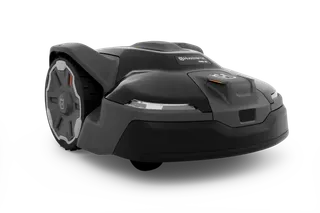
If you are going to buy an iQ, this is probably the one. The 420 iQ is the same 9.4-inch, 1-to-4-inch cut body as the 410 iQ with a faster 54-minute charge and a one-acre rating, and Husqvarna and Amazon have both sold it for well under list for most of 2026. Setup is wire-free: you mount the RS1 reference station, walk the boundary with the mower in the app, and draw stay-out zones and transport paths on the map. A long-time 450X owner who upgraded reported it cut his half-acre Michigan lawn faster and more systematically than his wired mower, in stripes or a checkerboard if you want to show off. The weak spots are the same as the rest of the family: EPOS needs sky, so narrow side yards between houses can drop signal and stop the mower cold, and while radar slows it for large objects it does not dodge sticks. Compared with a Mammotion Luba 2 AWD 3000 at similar money you give up all-wheel drive and a wider deck; compared with a Segway Navimow X3 you give up camera vision. What you get instead is a dealer who will actually service it and a four-year warranty. Best for a flat to moderately sloped acre where you want set-and-forget reliability and someone local to call.
Husqvarna
Husqvarna Automower 440 iQ
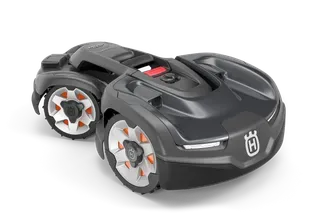
The 440 iQ is the big-lawn iQ, rated for two acres with a 138-minute runtime and a 54-minute charge, but it is physically the same 39-pound machine as the 420 iQ with the same 9.4-inch deck. That matters, because two acres on a nine-inch cut means the mower is out most of the day, every day, and any EPOS signal dropout under trees or between buildings costs you real coverage. Husqvarna does let you run a physical wire in trouble spots and mix it with the virtual map, which no camera-only rival offers. The 1-to-4-inch cut range is great for tall fescue and other cool-season lawns that hate a scalp. Owners on Husqvarna's site praise the cut quality and quiet 62 dB operation, but the same threads include people who waited months on dealer parts or had a remap land five feet off, and Amazon buyers rate this model lower than its siblings. At $4,300 it is a lot of money for rear-wheel drive and a 45 percent slope limit when a Mammotion Luba 2 AWD 5000 or an Ecovacs GOAT A3000 covers similar ground with AWD or a wider deck for less. Pick it if you have a big, open, mostly flat property, want Husqvarna dealer support, and like the idea of a four-year warranty on a mower that will be working nearly around the clock.
Husqvarna
Husqvarna Automower 435X AWD
The 435X AWD is the wired predecessor of the 435 iQ AWD, and for $2,000 less it gives you the same all-wheel-drive, articulated chassis and 70 percent slope rating. Instead of satellites it follows a buried boundary wire plus guide wires, with GPS-assisted mapping to even out coverage across 0.9 acres and app-drawn stay-out zones. Owners on Husqvarna's site are mostly in year three to five and report the kind of reliability that keeps them buying the brand, along with the usual notes: install is a multi-day project or a dealer job, there are always a couple of steep spots that need smoothing, and the alarm and support experience vary by region. A Danish long-term reviewer put it well - if your lawn is flat, this model gains you nothing over a cheaper Automower, but on steep, uneven ground it is close to unstoppable. Rivals like the Mammotion Luba 2 AWD skip the wire entirely and cost less, so this only makes sense if you specifically want wire reliability under tree cover, a known chassis, and a Husqvarna dealer behind it. Note the two-year warranty versus four on the iQ models, and that the heavier body leaves visible tracks on soft ground.
Robomow
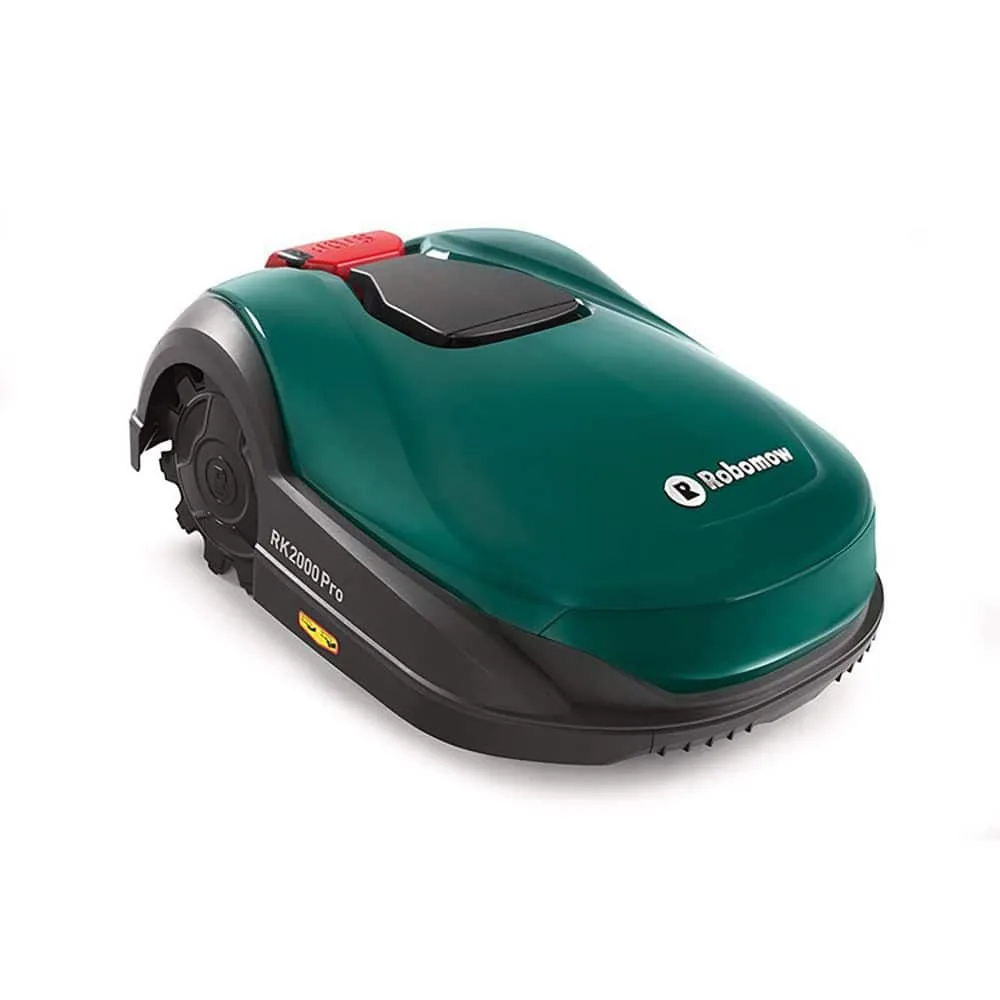
Robomow RK2000
Robomow was one of the original robot mower brands (Israeli, now part of MTD under Stanley Black & Decker) and the RK2000 is its mainstream US model: a boundary-wire mower rated for 2,000 square meters, about half an acre, sold mostly through Home Depot at $1,499 with a 3-year warranty. The RK series has a few things older wire mowers lack. The deck floats on a pendulum suspension, the blade disc sits offset so it can trim right over the wire on one side, the four razor blades are staggered on the spinning disc, and it climbs 45 percent inside the mowing area (20 percent along the wire). Runtime is 80-90 minutes with a 60-120 minute recharge, it is quiet at 64 dB maximum, and you can carve the lawn into a main zone plus four sub-zones. Programming happens on a 4.3-inch color touchscreen or over Bluetooth in the Robomow app; remote GSM access is an add-on module. It is also a random-pattern mower with no cameras, so anything you leave inside the wire gets bumped, and the wire itself is a weekend install. Home Depot buyers rate it a middling 2.9 out of 5 across 9 reviews, and Robomow's US presence has thinned since the MTD sale, so weigh that against a Husqvarna Automower 310 Mark II at a similar price with a far bigger dealer network. Pick the RK2000 if you specifically want the offset edge-cutting disc and the touchscreen; pick the Husqvarna for support.
Husqvarna
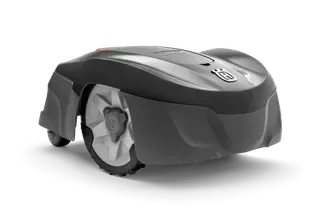
Husqvarna Automower 115H 4G
The 115H 4G is Husqvarna's budget Automower and, at the $300 the brand and its dealers have been selling it for through 2026, an easy way to try robot mowing without a big bet. It is old-school: you bury a boundary wire and one guide wire, it bounces randomly around up to 0.4 acres, and it cuts high at 2 to 3.6 inches, which makes it a better match for fescue and bluegrass than most budget robots. The 4G module means the Automower Connect app works from anywhere, with no subscription for ten years. Owners are consistent about the tradeoffs: wire install takes a weekend, the wire will eventually get cut and you will want a toner, cut height is a manual dial, there is no GPS tracking, and a fair number report it stalling short of the dock. It has only a bumper, so pick up toys and sticks, and slopes top out around 30 percent. Against a Segway Navimow i105N or a Worx Landroid Vision, you give up wire-free setup and any real obstacle avoidance; what you keep is quiet 58 dB operation and Husqvarna dealer service. Right for a small, flat, fenced yard on a tight budget; wrong for anyone who hates the idea of wire.
Husqvarna
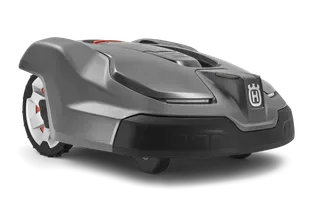
Husqvarna Automower 430XH
The 430XH is the high-cut version of Husqvarna's long-running 430X: the same 9.45-inch deck, 0.8-acre rating and 145-minute runtime, but a 2-to-3.6-inch cutting range for tall fescue, bluegrass and other lawns that look terrible under two inches. It runs on a buried boundary wire with up to three guide wires and GPS-assisted mapping so it spends more time in areas it has been missing, and ultrasonic sensors slow it before it bumps into things. Owners are split in a way you should read before buying: the happy ones describe two-plus seasons of flawless mowing on hills and muddy spots and a lawn the neighbors comment on, while the unhappy ones describe a wheel falling off on the first mow, a mower that chewed its own boundary wire, and support that took days to answer. Nearly everyone agrees the wire install is 10 to 20 hours and worth renting a trencher for. Husqvarna's product page marks it discontinued, but its own shop still sells it at $2,500 with a two-year warranty. If you want tall-grass cutting without wire, the 420 iQ is the modern answer; if you have heavy shade where satellites struggle, this remains a sensible pick.
Husqvarna
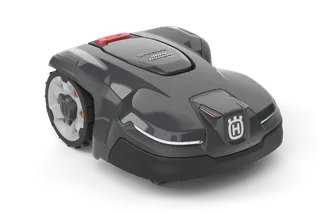
Husqvarna Automower 415X
The 415X was Husqvarna's small-yard X-line mower before the iQ series, and it is still sold through the Husqvarna shop and dealers at $2,000 even though the product page says discontinued. You get the premium X-line touches - LED headlights, app-adjusted electric cut height, GPS theft tracking and built-in cellular - in a 21-pound body rated for 0.37 acres and 40 percent slopes. The cut range of 0.8 to 2 inches suits warm-season grasses and tidy, short lawns, not tall fescue. It runs on a boundary wire with guide wires and a systematic passage mode, and the 50-minute runtime with a 60-minute charge means it cycles often. Owners say it just works once the wire is in, and that install takes about half a day if you watch the videos first; the complaints are about durability, with a warped cutting disk, wheels lost to surfacing rocks, and mowers that would not wake up after winter, plus customer service that punts to dealers. At 62 dB it is noticeably louder than a Navimow i110N, and a Segway or Mammotion at this price is wire-free with cameras. Choose it for a small, wire-friendly yard where you want Husqvarna dealer support and a short, even cut.
Husqvarna
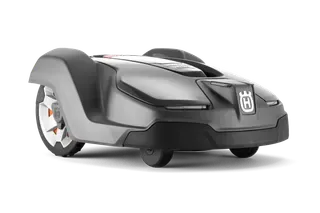
Husqvarna Automower 430X
The 430X is Husqvarna's workhorse wired mower for medium lawns, rated for 0.8 acres and 45 percent slopes with a 9.45-inch deck and a low 0.8-to-2.4-inch cut range suited to Bermuda, zoysia and other lawns kept short. It follows a buried boundary wire with guide wires and GPS-assisted mapping, has ultrasonic sensors to slow for obstacles, and runs 145 minutes on a 50-minute charge, so it can cover a lot of ground in a day. Owners describe the cut quality as the reason to buy - a fine, even finish all summer - and the boundary wire as the reason to hesitate, with several reporting the mower cutting its own wire and having to splice it, plus flimsy connectors at the charging station. Wire install is the big lift; most say a rented trencher beats stakes. Husqvarna marks it discontinued, but the Husqvarna shop lists it at $2,500 and Amazon has been clearing units near $1,500, which is a lot of mower for the money if you can live with a wire. Against wire-free rivals like the Segway Navimow X3 or Mammotion Luba 2 you give up virtual maps and camera avoidance; against the 420 iQ you give up EPOS but keep the same dealer support for less. Good for shaded lots where satellites are unreliable.
Segway
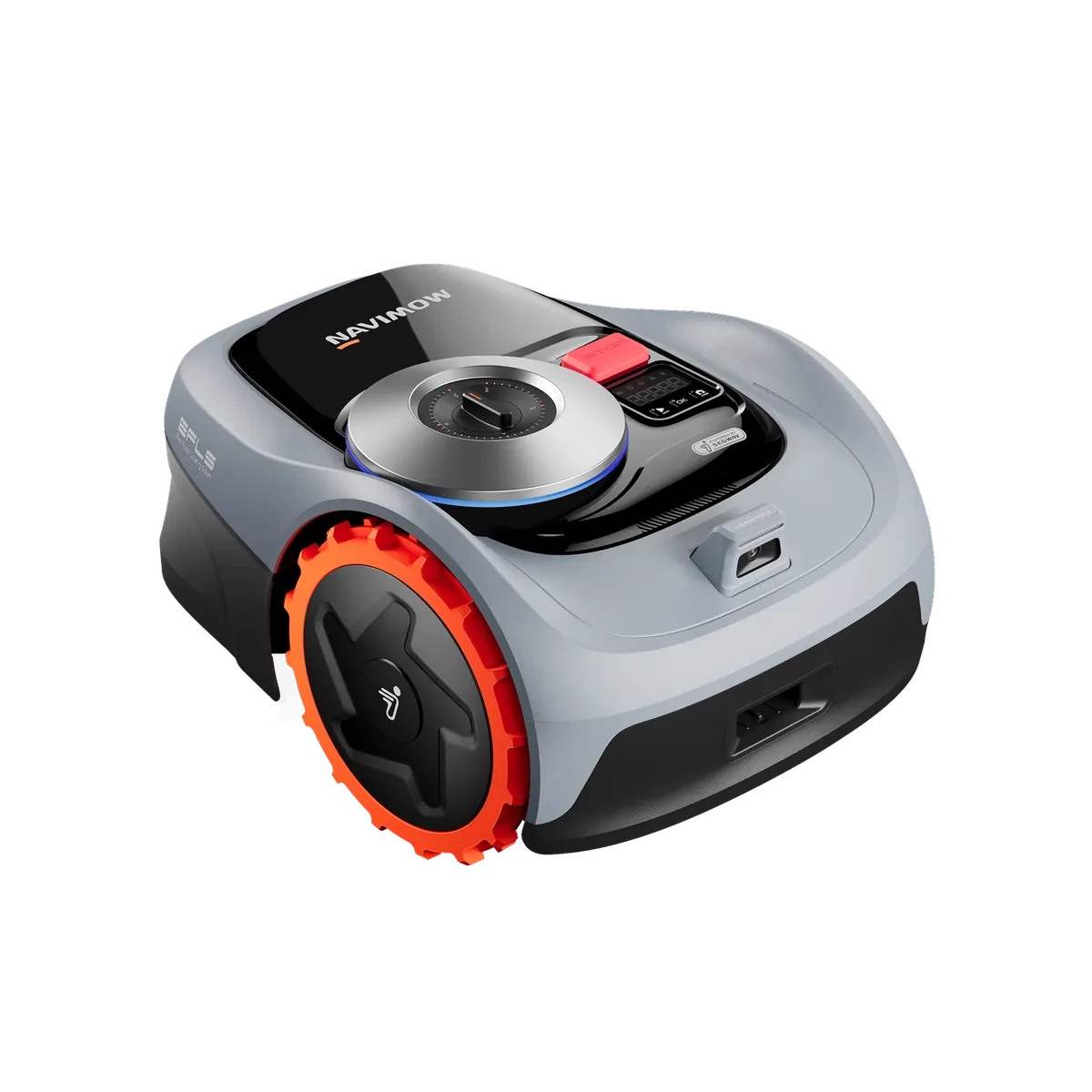
Segway Navimow i105N
The i105N is the mower that made wire-free RTK cheap. Segway cut it from $999 to $799 in 2026 and it regularly dips to $669-699, which puts it in Worx Landroid Vision territory while still using a proper RTK antenna for centimeter-level positioning. It is small - 7.1 in cutting width, 24 lb, a 2.55Ah battery good for about an hour - so the rated 1/8 acre is honest; Amazon owners with a typical city lot say a full cut takes around 2.5 hours across two or three charge cycles. Setup is genuinely DIY: mount the antenna somewhere with open sky, drive the mower around the perimeter with your phone, and let AI Assist Mapping snap to the lawn edges. Owners like the quiet 58 dB motor, the straight-line stripes, and that it pays for itself in a season versus a lawn service. The knocks are consistent too: getting stuck on flat ground and in dips, mapping frustration when trees hang over the antenna, a manual cutting-height dial, and a few units dying after a few months with slow email-only support. The 30% slope limit and front-wheel drive rule out anything hilly. Compared with the Mammotion Yuka Mini, the i105N is cheaper and simpler but has no vision-only mode when RTK is hopeless; step up to the i110N if you have more than about 5,000 sq ft.
Segway
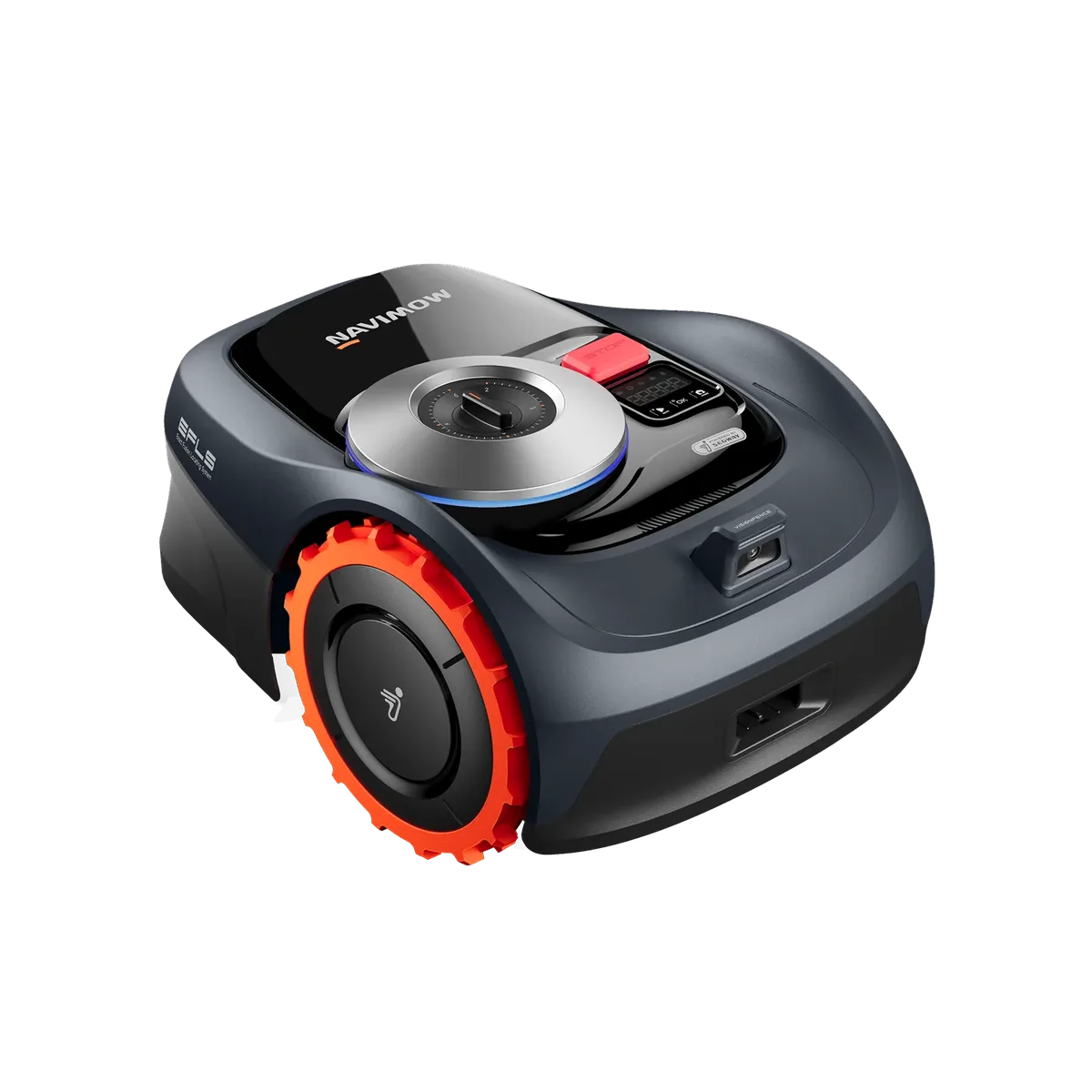
Segway Navimow i110N
The i110N is the same 7.1 in body as the i105N with double the battery (5.1Ah, about 120 minutes per charge) so it can cover a quarter acre, and it won Tom's Guide's Editor's Choice for cut consistency at a price that has slid from $1,299 at launch to a $929 list and frequent sub-$800 sales. It uses Segway's EFLS 2.0 RTK plus a front VisionFence camera, so when the satellite fix wobbles under trees it can hold the boundary visually for a while instead of wandering off. Reviewers consistently praise the straight, overlapping stripes with no missed patches and the near-silent 58 dB operation that makes night mowing realistic. The complaints are the flip side of the budget price: it is slow (Tom's Guide clocked roughly three times the time of push mowing), the 30% slope rating and front-wheel drive mean it spins out on real hills, PCWorld's unit repeatedly drove off curbs because there is no drop-off detection, and GPS anti-theft needs the $120 Access+ 4G module. Segway has pulled it from its own store in favor of the i210 AWD, but Home Depot still stocks it. For a flat quarter-acre suburban lot it remains one of the cheapest dependable wire-free options; if your yard has slopes or a parking strip, look at the i210 AWD or a Luba Mini instead.
Segway
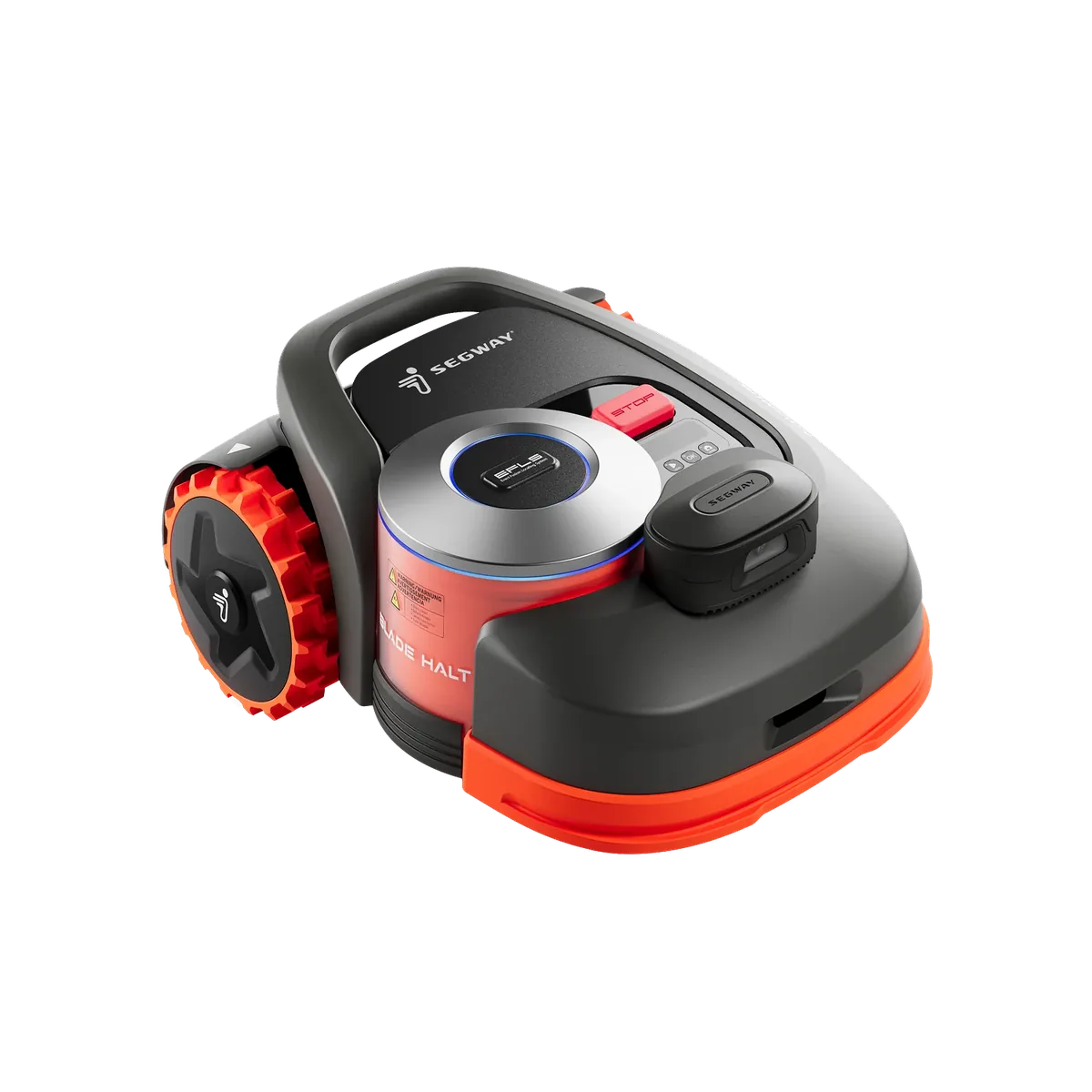
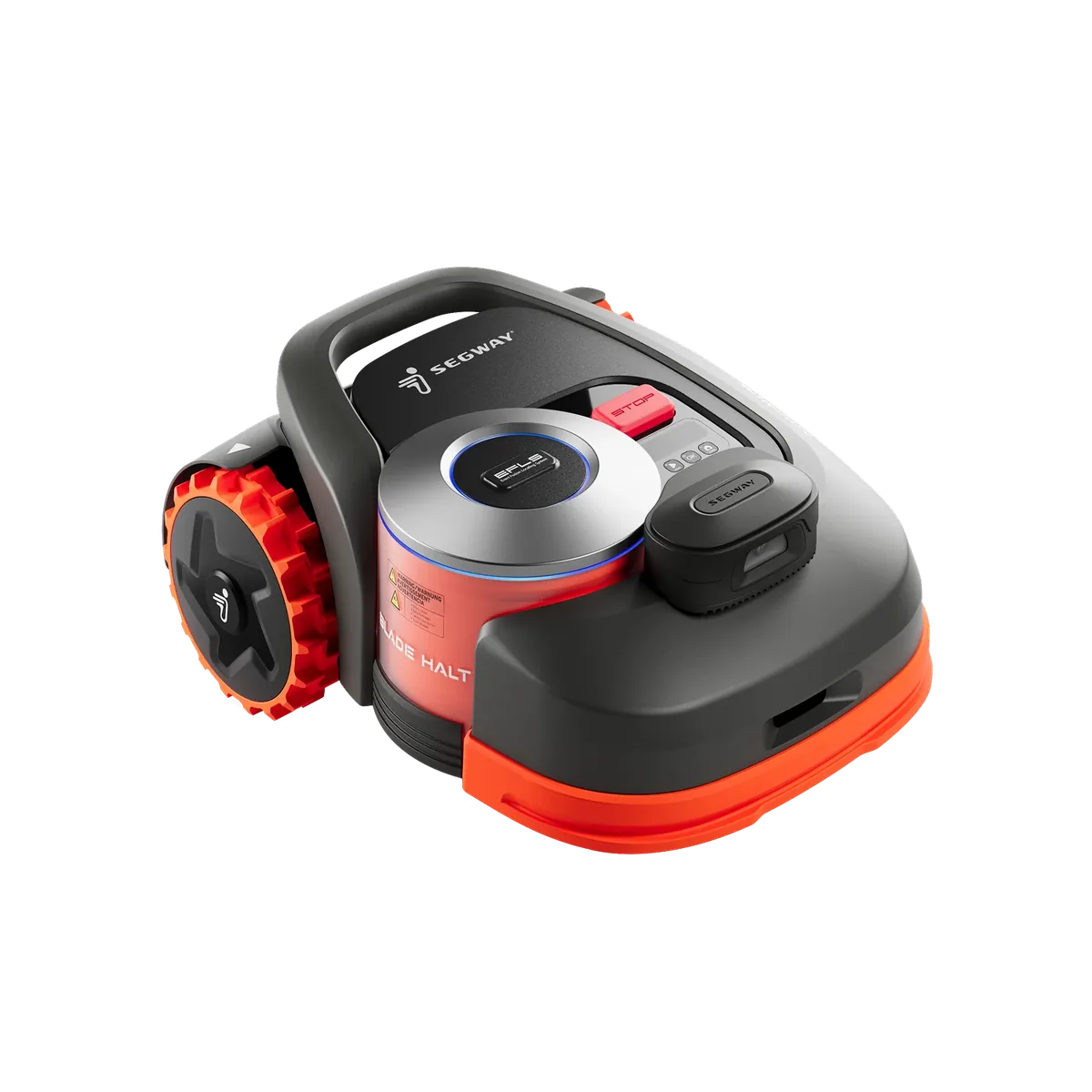
Segway Navimow H1500N
The H1500N-VF is Segway's first-generation premium mower, now on clearance as the H2 series replaces it, and the pricing is chaotic: Segway's store lists it sold out at $2,199, Amazon has bounced between $999 and $1,599, and Home Depot still carries it. What you get is a heavier 38 lb machine with quiet in-wheel hub motors (54 dB, the quietest Navimow), a battery that runs about four hours, built-in 4G with a year of service, and a real rain sensor. Navigation is EFLS 1.0 - RTK only - so it needs a clear sky over the antenna; the plug-in VisionFence camera pod on the back handles obstacles but does not help positioning, and Amazon owners report the map drifting by a few feet on tough sites and the mower crossing mapped boundaries. The dealbreaker for many US lawns is cutting height: 1.2 to 2.4 inches is a golf-course range, far too low for fescue or St. Augustine that wants 3 inches or more. The 45% slope rating beats the i series though, and owners praise how it handles ditches and uneven ground once mapped. Buy it only if your lawn is short-cut grass on a mostly open lot and you find one near $1,000; otherwise the newer X330 or H220 gets you 2 to 4 inch cutting and vision-fused positioning for not much more.
Segway
Segway Navimow H3000N
The H3000N-VF is the big-lawn version of Segway's original H series, rated for 0.74 acre with the same 8.3 in cut, 54 dB hub motors and 38.6 lb chassis as the H1500N but a larger battery (about four hours of mowing, five hours to recharge) and three years of 4G service bundled instead of one. It is being cleared out as the H2 and X3 lines take over, so it has sold on Amazon for $1,199 to $1,299 - sometimes less than the smaller H1500N - and Home Depot still lists it while Segway's own store shows it sold out at $2,599. Amazon owners say setup is easy and the finish looks great, and one reports about a third of an acre per charge. The gripes are familiar H1 issues: wheels that lack grip on damp slopes despite the 45% rating, boundary edits that are fiddly, some random-looking path choices, and RTK-only EFLS 1.0 positioning that struggles under tree canopy because the VisionFence camera only avoids obstacles. The 1.2 to 2.4 inch cutting height range is the real limiter for cool-season grasses. Against the Mammotion Luba 2 AWD 3000 at a similar clearance price you give up all-wheel drive and a 4 inch max cut but gain quieter running and a 4-year warranty. Best for a flat, open three-quarter acre of short-cut warm-season grass.
Segway
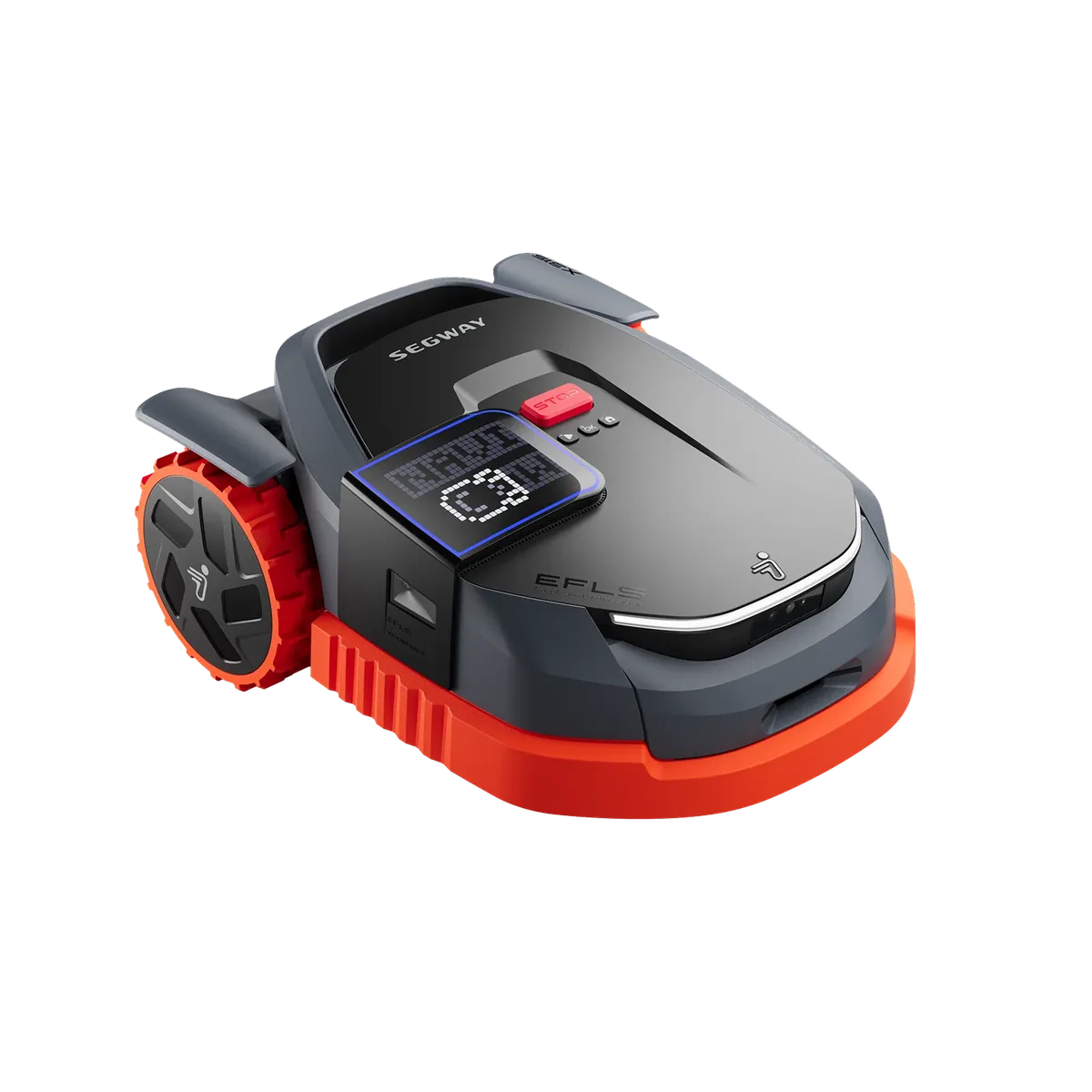
Segway Navimow X315
The X315 is the entry to Segway's X3 line: the same 43 lb chassis, 9.3 in cutting deck, 2 to 4 inch height range and EFLS 3.0 positioning as the $4,499 X390, just with a 6Ah battery good for about two hours and a half-acre rating. EFLS 3.0 fuses RTK with three cameras doing visual SLAM and odometry, which is why testers at Notebookcheck and TechRadar found it kept mowing straight under trees where RTK-only mowers stall. Obstacle avoidance uses a 300-degree camera array with a ToF sensor and recognizes 200+ objects including pets, with night vision so it can run after dark at 60 dB. Setup is about 30 minutes and truly wire-free, though you still mount an RTK antenna. Segway has pulled it from its own store (listed at $1,999 but unavailable) while Home Depot, Acme Tools and Abt still sell it, and it is the only X3 that does not get multiple years of 4G included - one year, then about $33 a year. Reviewers' knocks: it is two-wheel drive so the 50% slope rating is optimistic on side-hills, there is no onboard rain sensor (it relies on forecasts), the single 9.3 in disc leaves about 3.5 in uncut at edges without the optional Trimmer accessory, and standby power draw is high. Versus the Mammotion Yuka at $1,399 the X315 costs more but is faster and better under trees; if you are near 0.5 acre, the X330 is often only $300 more.
Segway
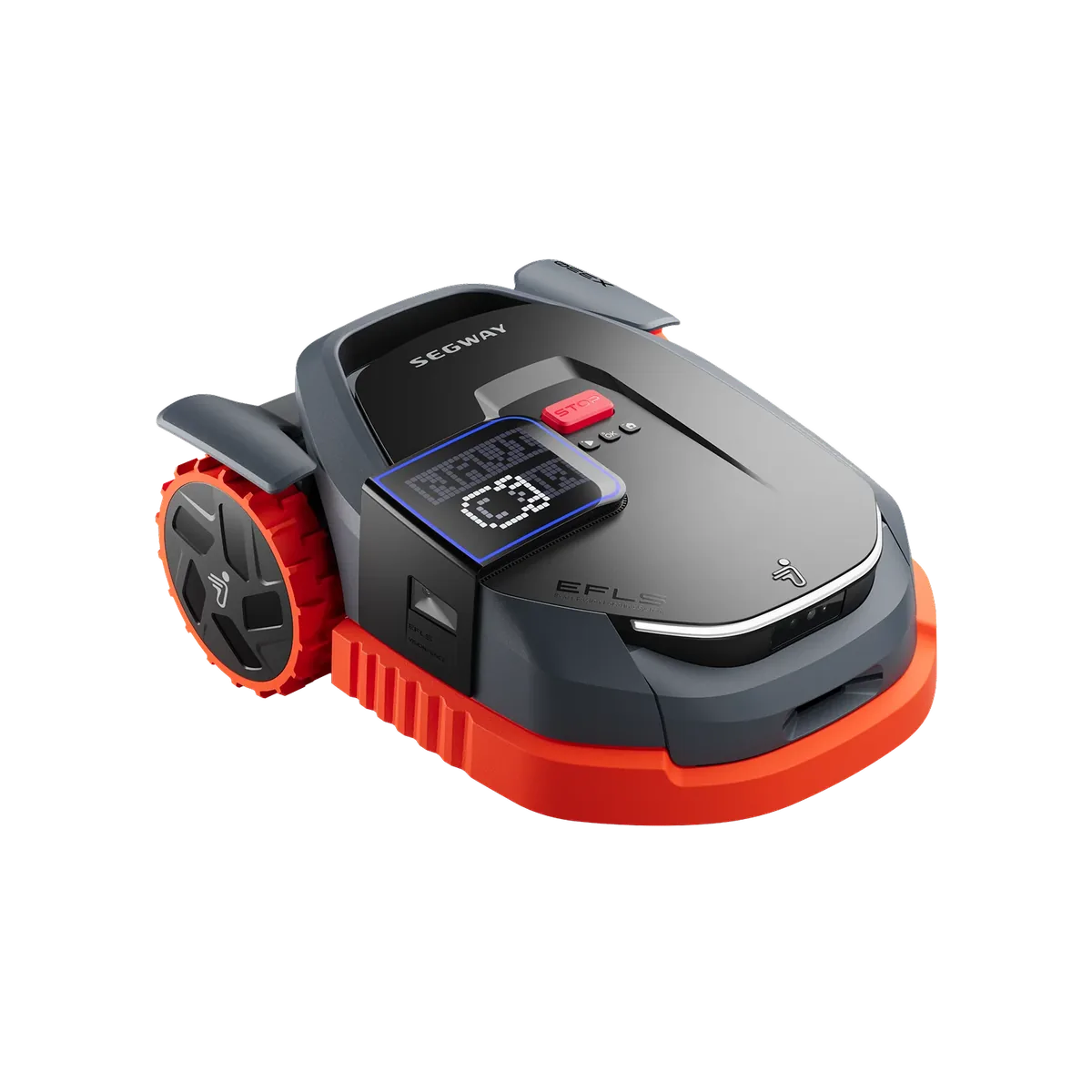
Segway Navimow X330
The X330 is the X3 model most people should look at: a one-acre rating, 8Ah battery for about 160 minutes of mowing with a 65 minute recharge, and it sits at $2,299 on Segway's site after a $500 cut from launch pricing. Like the rest of the X3 line it runs EFLS 3.0 - RTK fused with three cameras doing visual SLAM - so it holds position under tree canopy where the older H series and most budget RTK mowers lose lock, and its 300-degree camera plus ToF array recognizes 200+ obstacles with night vision. It mows fast (about 3.3 ft/s) in tidy parallel stripes, cuts 2 to 4 inches, runs at 60 dB, and includes two years of 4G with GPS tracking before the roughly $33 a year Connect+ renewal. Pro Tool Reviews and Robot Review Desk both call the X3 the most polished wire-free mower for flat-to-moderate suburban lots. Where it falls short: two-wheel drive makes the 50% slope rating shaky on side-hills, there is no physical rain sensor (it relies on forecasts), the centered 9.3 in disc leaves a few inches uncut along walls unless you buy the Trimmer accessory, and 43.7 lb is a lot to lift over a curb. Against the Mammotion Luba 2 AWD 3000, the X330 is quicker and gentler on turf but the Luba climbs 80% grades. For a one-acre yard with trees and gentle slopes, this is the sweet spot of the range.
Segway
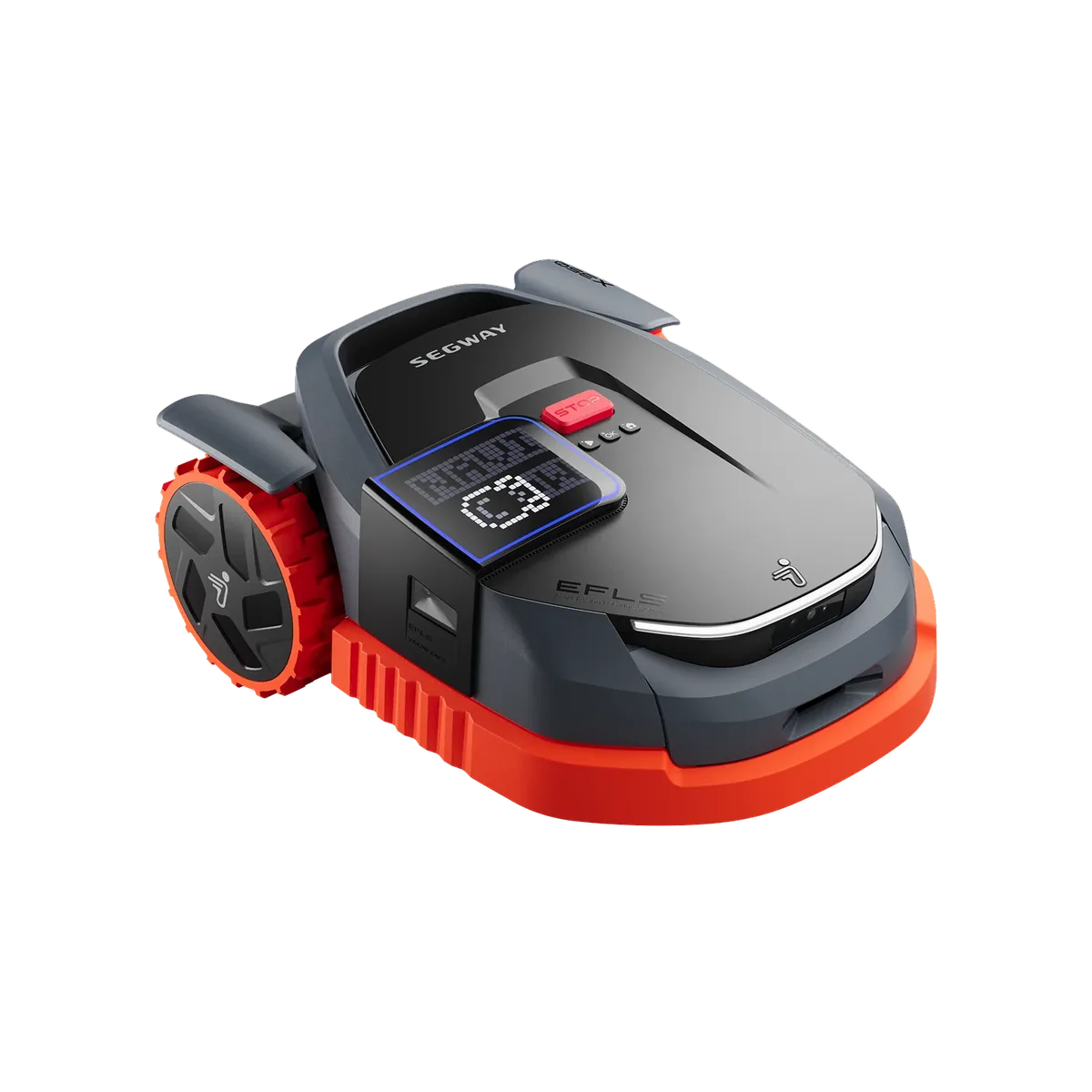
Segway Navimow X350
The X350 buys you battery, not a different mower: it shares the X330's 43.7 lb chassis, 9.3 in cut, 2 to 4 inch height range, EFLS 3.0 RTK-plus-vision positioning and 300-degree camera array, but carries a 10Ah pack for about 200 minutes per charge (80 minute recharge) and a 1.5 acre rating. Segway lists it at $2,799, down from $3,499 at launch, and it includes three years of 4G before the roughly $33 a year renewal. Residential Tech Today beta-tested this exact model for a season and found the standout traits were quiet 60 dB running that allowed night mowing, reliable obstacle recognition, and confident navigation on a tree-heavy lawn - RTK antenna placement still mattered, and moving it meant remapping. Early-spring patches of thin grass confused the VisionFence boundary logic until it was toggled off, and the optional Trimmer accessory occasionally hung up on rocks. As with all X3 mowers it is two-wheel drive, so the 50% slope rating assumes straight up-and-down runs, and there is no onboard rain sensor. Compared with a Husqvarna Automower 450X at roughly $4,000 installed, the X350 is a DIY afternoon and about a third cheaper; compared with the Mammotion Luba 2 AWD 5000 it gives up AWD hill-climbing for faster, straighter cutting. Best for 1 to 1.5 acres of mostly open, gently rolling lawn.
Segway
Segway Navimow X390
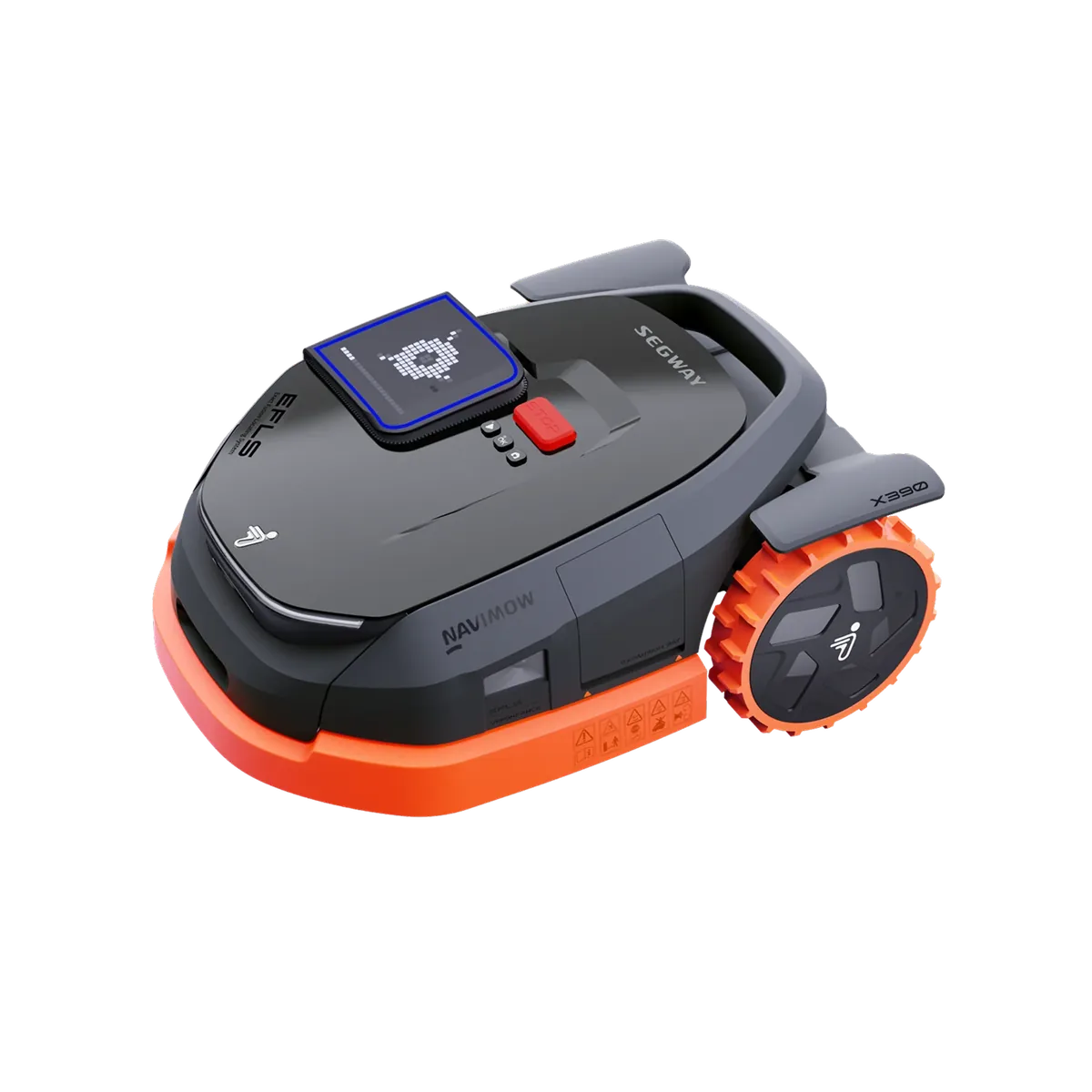
The X390 is the flagship of the X3 series and the one Pro Tool Reviews ran on a multi-acre property with four zones linked by tunnels: it covered 3,300 sq ft on 16% of its 12.8Ah battery, which works out to roughly four hours of mowing and a 2.5 acre rating, with a 100 minute recharge. Everything else matches its siblings - 9.3 in cut, 2 to 4 inch heights, 60 dB, EFLS 3.0 RTK fused with three-camera visual SLAM that keeps working under trees, 300-degree obstacle recognition with night vision, and a 43.9 lb body on 10 inch wheels. Segway bundles five years of 4G service, the longest in the lineup, before the $32.90 a year renewal. At $4,499 (down from $4,999) it is expensive for a two-wheel-drive mower: the Mammotion Luba 2 AWD 10000 covers the same area with all-wheel drive and 80% slope capability for less, and the X3's 50% rating only holds up on straight climbs. Testers also note there is no physical rain sensor, the single 9.3 in disc is narrow for 2.5 acres so full cycles take days, and edges need the optional Trimmer attachment. In its favor: faster and more precise stripes than the Luba, gentler on turf, a cleaner app, and the Doodle feature for mowing patterns into the lawn. Choose it for a large, flat-to-rolling estate lawn with tree cover where positioning reliability matters more than hill climbing.
Ecovacs
Ecovacs GOAT GX-600
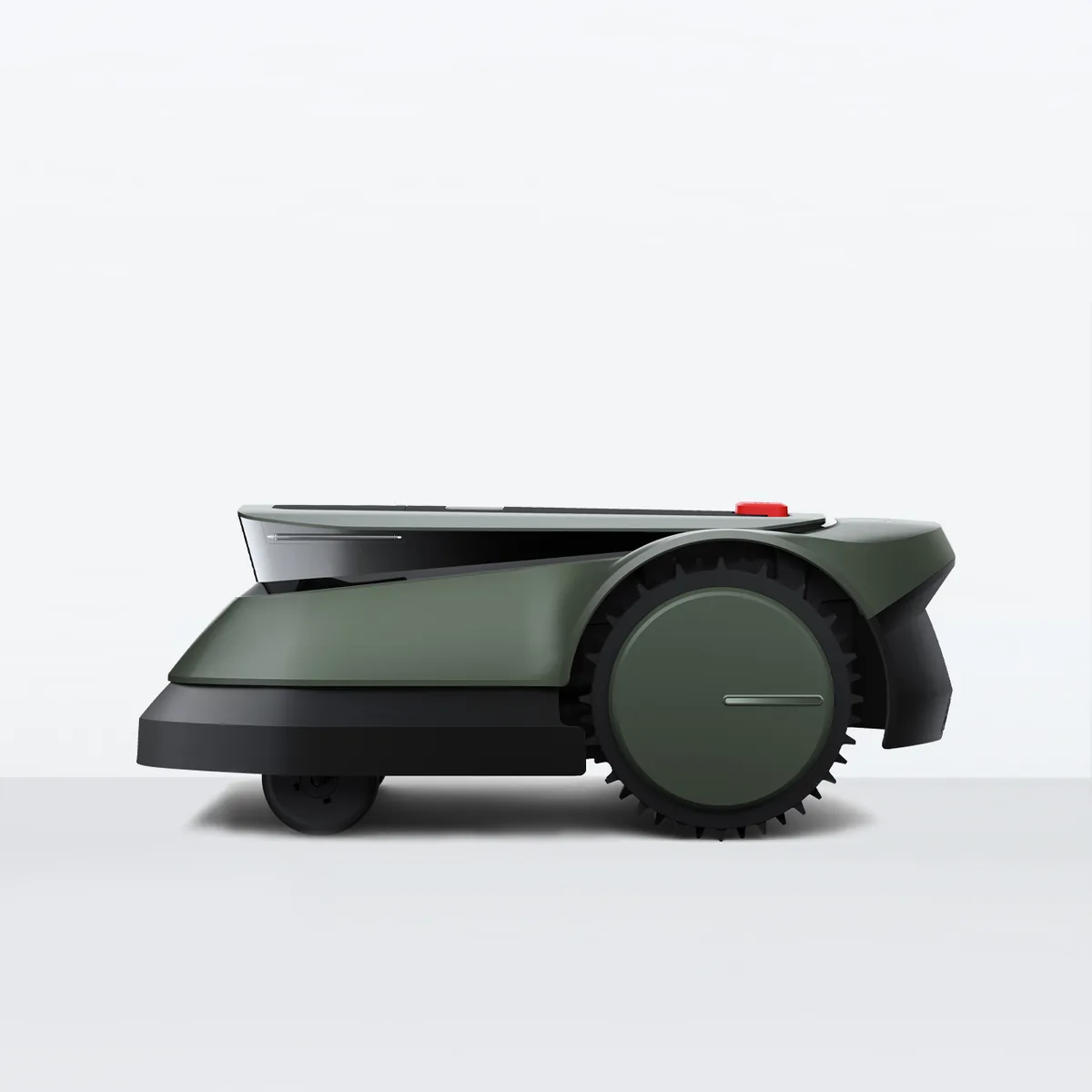
The GOAT GX-600 is Ecovacs' answer to the 'I just want it to work' crowd. There is no wire to bury and no RTK antenna to mount: a 150-degree fisheye camera plus a ToF sensor read the color and texture of your grass, so you set the base, press go, and it figures out where the lawn ends. That is genuinely quicker to get running than a Segway Navimow i105N, but the trade-off is that it never draws a map. There are no zones, no no-go areas, and no path to a second patch of grass across a driveway, and Android Police found it needs clear physical borders (beds, fences, mulch lines) to stay put. It handles 40% slopes, cuts an 8.66-inch swath, and heads home when it senses rain. Cutting height is a manual dial rather than an app setting. Ecovacs lists it at $1,299.99 but it has sat at $999.99 on their own store for months, and unlike the rest of the GOAT range it is not sold on Amazon in the US. Think of it as a set-and-forget mower for one simple, fenced yard under 6,500 sq ft; if your lawn has islands, a front and back section, or an open edge onto a neighbor's grass, spend a little more on the O1000 RTK or eufy E15 and get real maps.
Ecovacs
Ecovacs GOAT O1000 RTK
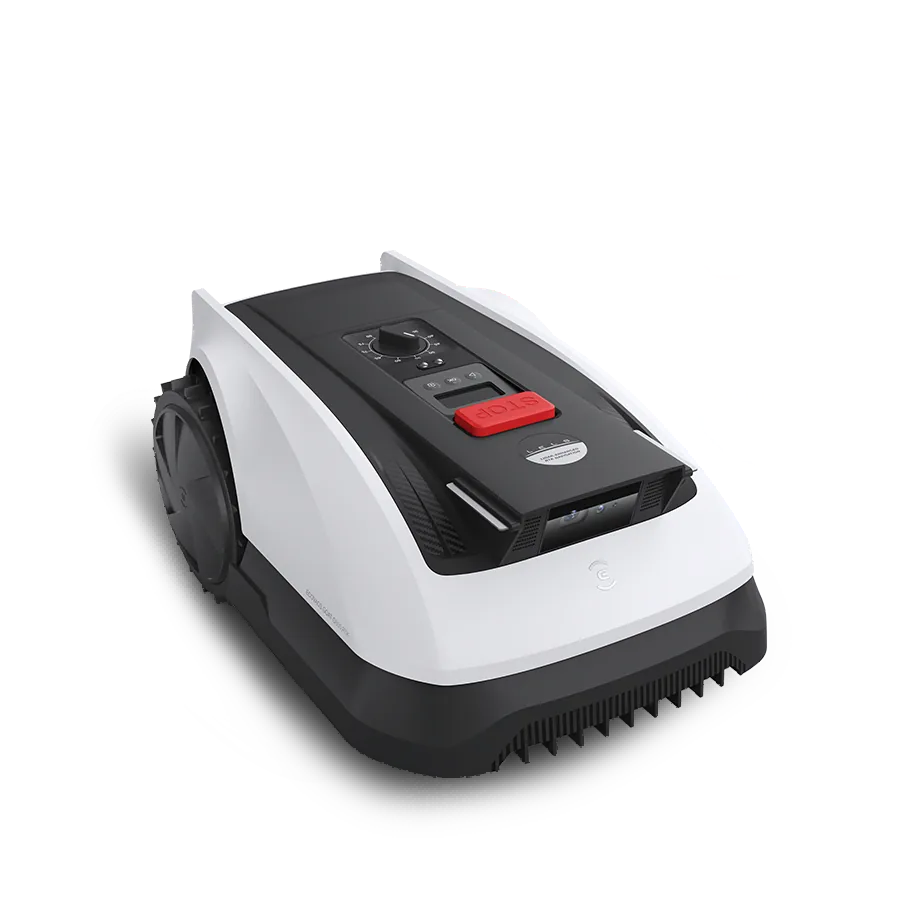
The GOAT O1000 RTK is the cheapest way into a properly mapped, wire-free robot mower from a big brand, and at $999.99 it undercuts the Segway Navimow i110N while doing most of the same job. You mount the included RTK antenna somewhere with open sky, let the mower auto-map, and then carve the map into zones and no-go areas in the Ecovacs Home app. A front camera and 3D ToF sensor handle obstacle avoidance and help it hold position when the satellite view gets patchy under trees. Owners on Amazon like the narrow 1.31-foot body for side yards and the TruEdge pass that gets close to fences, and several say it tamed rough, unmanicured rural lawns. The catches are a slow pace and a small 4 Ah battery: about 65 minutes of mowing, then 100 minutes on the dock, so a full 1/4 acre is an all-day affair. Owners also complain that the manual and app walkthrough are thin, and rural users have hit RTK signal drops that needed a support call. Getting mapping this cheap means you give up the string trimmer of the newer O1000 LiDAR Pro and settle for 45% slopes. For a flat-to-rolling suburban lot under about 8,600 sq ft with a decent view of the sky, it is a strong value pick.
Ecovacs
Ecovacs GOAT O1000 LiDAR Pro
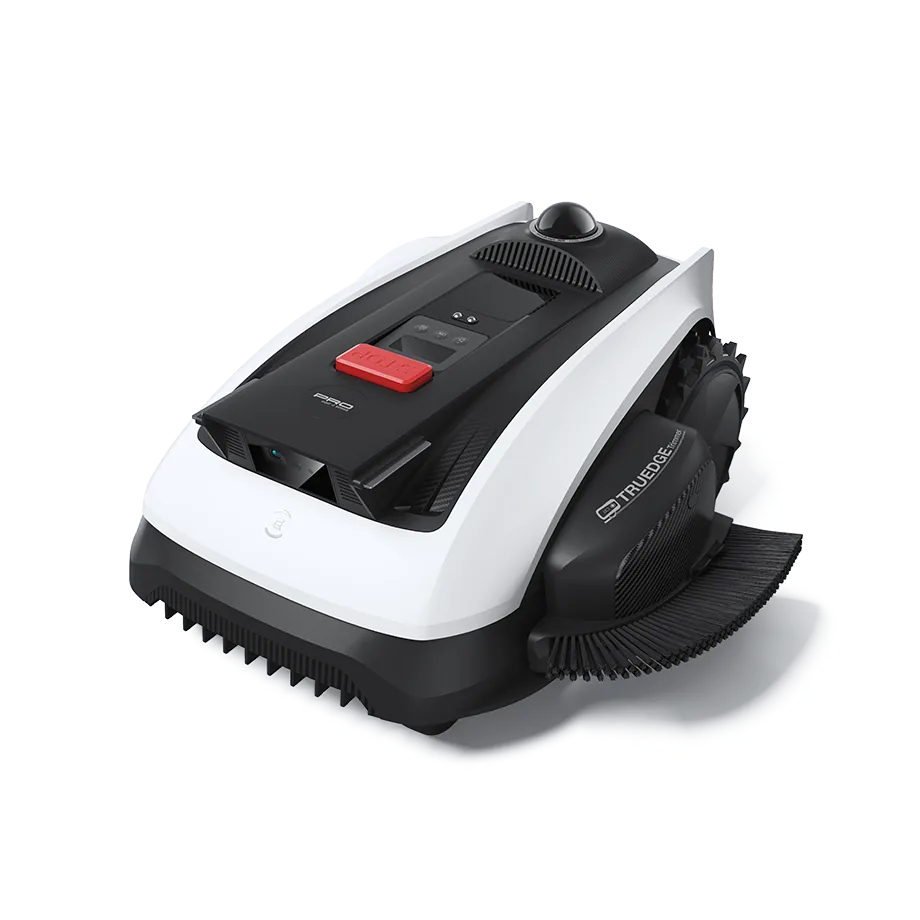
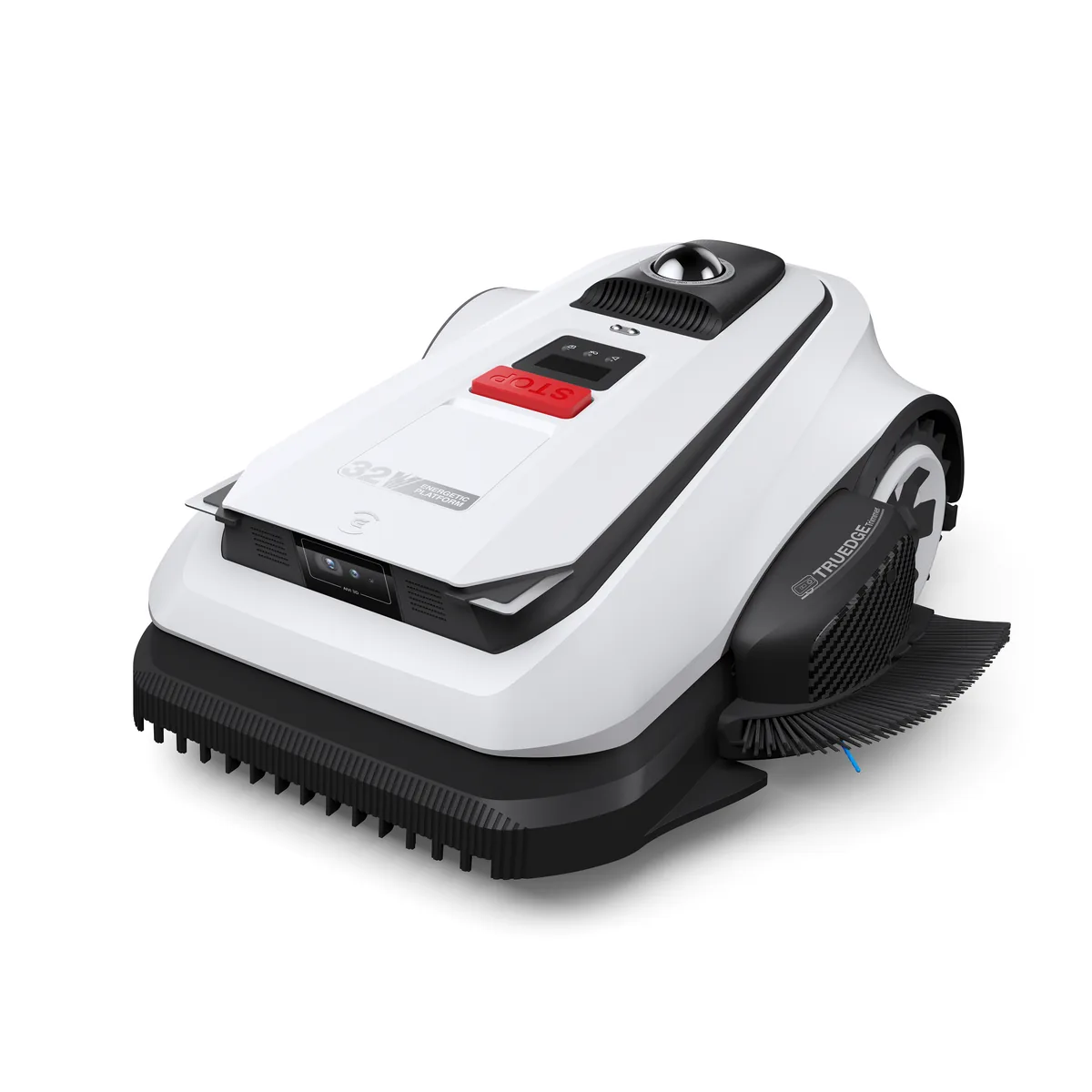
The GOAT O1000 LiDAR Pro is the 2026 replacement for the O1000 RTK's antenna: a spinning 360-degree LiDAR on the hood plus a 3D ToF sensor build a 3D map of your yard with no satellite station, so it works under tree canopy and beside walls where RTK mowers lose lock. Ecovacs also bolted on its TruEdge string trimmer, which swings out on the left side to buzz grass up to 3.54 inches past the blade disc along fences and beds. That trimmer is the big reason to pay $1,499.99 instead of $999.99 for the O1000 RTK, and it is also the loud part: 61 dBA mowing, 81 dBA when the trimmer spins. The 5.2 Ah battery gives about 90 minutes per charge with a 70-minute recharge, cutting an 8.66-inch path at 1.18 to 3.15 inches. Early owners say the blades are whisper quiet, that it copes with bumpy vole-ridden lawns and exposed roots, and that a 3,700 sq ft back yard takes two charges on the gentle speed setting. The app has a learning curve and you will want the optional garage if the dock sits in full sun. Against the Segway Navimow i110N it costs more but skips the antenna and adds edge trimming; against the Dreame A3 AWD 1000 it is cheaper but rear-wheel drive and limited to 45% slopes. Best for shaded 1/4-acre lots where an RTK antenna would struggle.
Ecovacs
Ecovacs GOAT A2000 LiDAR Pro
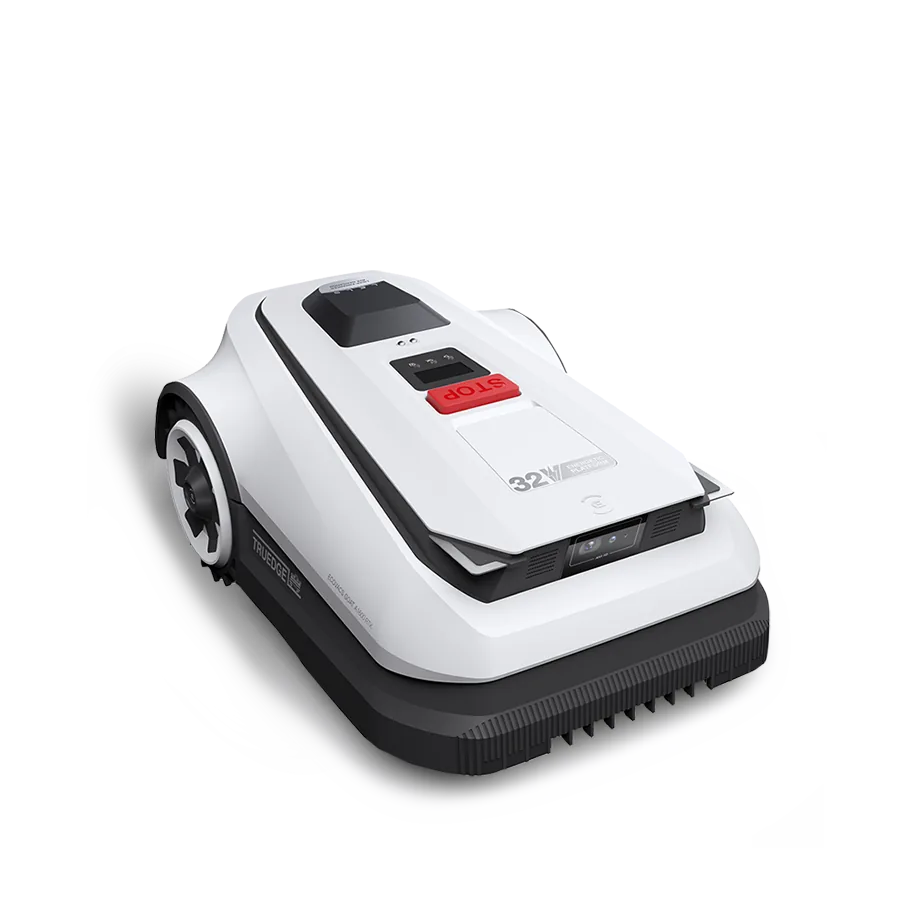
The GOAT A2000 LiDAR Pro is the mid-size member of Ecovacs' 2026 LiDAR trio: the same HoloScope 360 spinning LiDAR and 3D ToF mapping as the A3000 LiDAR Pro, the same 32V dual-disc deck cutting a 12.96-inch path, and the same left-side TruEdge string trimmer, but with a smaller 3 Ah battery aimed at yards up to about half an acre. It maps in minutes without an RTK antenna, holds 2 cm positioning under trees, and lets you split, merge and delete zones in the app. Owners on Amazon are mostly enthusiastic: one who works with warehouse robots said setup took 30 minutes and 1,500 sq ft used about 40% of the battery, and most like the striped finish and the fact that the trimmer actually handles fence lines. The gripes are familiar Ecovacs ones. The trimmer only works on clockwise passes, it cannot reach into tight or triangular corners, path edges still need a hand trimmer, and reviewers at BTTR and EFTM watched the wheels scuff dirt around fence posts. Runtime is a modest 50 minutes with a 50-minute recharge, so big lawns mean several cycles. At $1,999.99 it sits right on top of the Segway Navimow X330 and Mammotion Luba Mini AWD; pick the A2000 if edge trimming matters more to you than all-wheel drive, and step up to the A3000 LiDAR Pro if your lawn is closer to 3/4 acre.
Ecovacs
Ecovacs GOAT A2500 RTK
The GOAT A2500 RTK was Ecovacs' 2025 flagship and it is now the value play in the range: the list price is still $1,999.99 but Amazon has sold it between $1,500 and $1,750 for most of 2026. You get the 32V dual-disc deck with a 12.99-inch cut, 50% slope capability, and a LELS RTK antenna backed by a 3D ToF sensor and AI camera so it keeps its bearings under moderate tree cover. The 3 Ah battery charges in about 45 minutes, which matters because runtime is only about 64 minutes; Ecovacs' own math is 5,382 sq ft per charge. Owners are split. Happy ones describe mowing three separate yards every couple of days, a useful live map, and a mower that frees itself when stuck. The unhappy ones (and the Amazon average sits in the low 3s) report RTK dropouts, hectic spot-turns that dig into turf, edge passes that back off when plants overhang a bed, and nagging app pop-ups. Notebookcheck's verdict of 'fast, but not flawless' is about right. Compared with the Segway Navimow X330 it is quicker across open ground but less refined at edges, and unlike the newer A2000 LiDAR Pro it has no string trimmer. It suits open half-acre lawns with a good view of the sky where you want speed and can tolerate some fiddling; heavy shade or lots of narrow beds point you toward the LiDAR models.
Ecovacs
Ecovacs GOAT A3000 LiDAR Pro
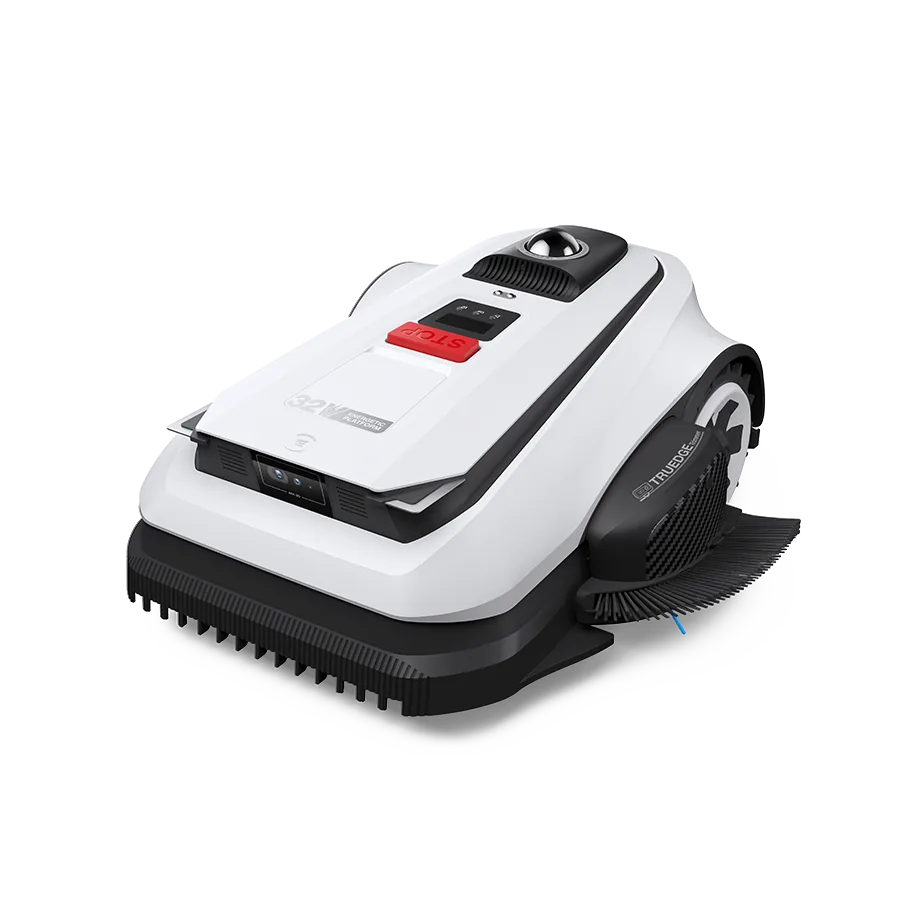
The GOAT A3000 LiDAR Pro is the mower Ecovacs points at when someone asks for a whole-yard robot: a 7.5 Ah, 32V battery good for about 160 minutes per charge, a 13-inch dual-disc deck, 50% slopes, and a built-in TruEdge string trimmer that swings out to cut flush against fences, beds and walls. Navigation is a 360-degree LiDAR plus 3D ToF, so there is no antenna and it maps a typical lot in about five minutes, holding 2 cm accuracy under trees where RTK mowers wander. It launched in February 2026 at $2,499.99, which is $500 less than the trimmer-less 2025 A3000 LiDAR it replaced. Reviewers at How-To Geek, BGR and Freshly Charged all landed in the same place: excellent cut quality and the trimmer removes 75-90% of hand edging, but it is loud when the trimmer runs (82 dBA), it treats grass over about 8 inches as an obstacle, and it struggles with curved borders and tall tufts. Owners moving from a first-generation Mammotion Luba praise how easy LiDAR setup is versus placing an RTK antenna, but note that stripes default to true north until you fiddle with per-zone angles, and that the trimmer will not run in auto mode without a dedicated edging session. Against the Dreame A3 AWD Pro it is rear-wheel drive with a lower slope rating; against the Mammotion Luba 2 it wins on edging. Best for well-kept suburban lawns up to 3/4 acre with mostly straight borders.
eufy
eufy E15
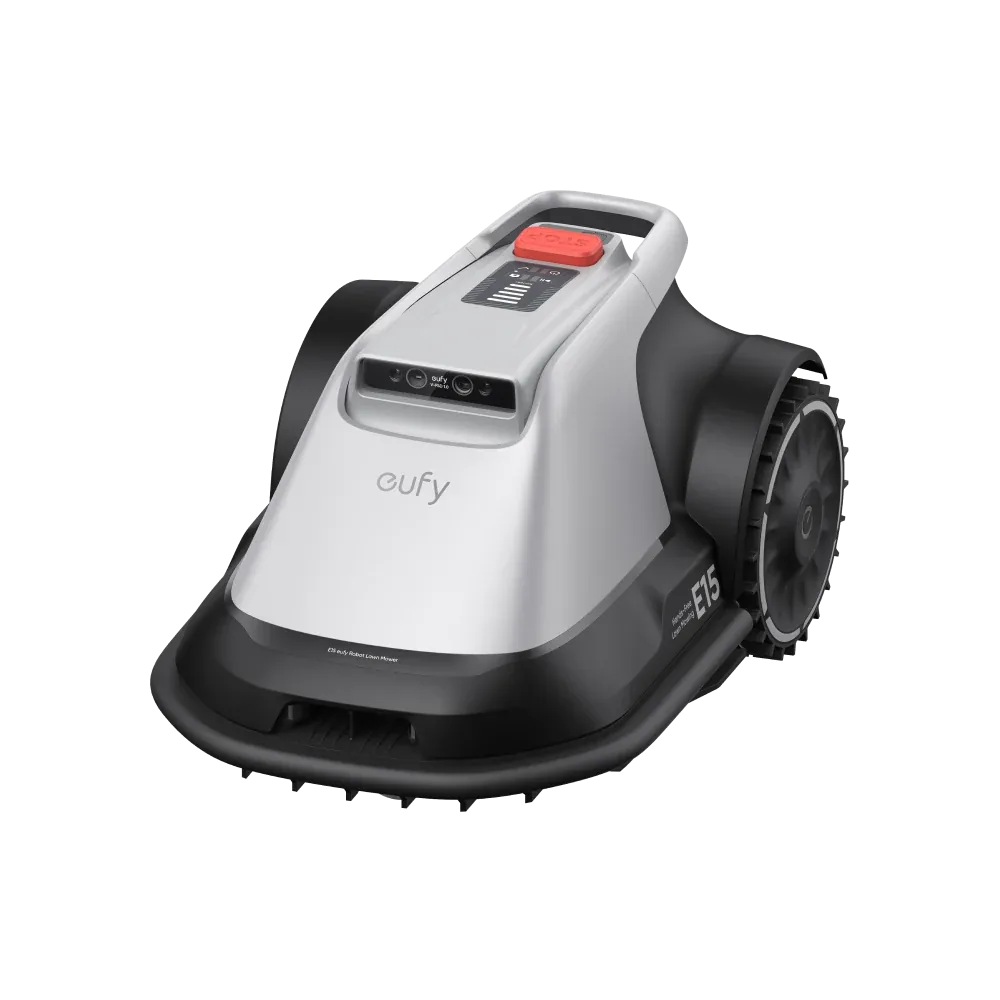
The eufy E15 is the robot mower for people who already own a robot vacuum and want the lawn version: unbox it, plug in the roofed base station, and its twin stereo cameras auto-map a 0.2-acre yard in 10 to 25 minutes with no wire, no RTK antenna and no perimeter drive. TechRadar, How-To Geek and Amazon owners all rave about how painless that first day is, and the 56 dB cut from three razor blades on an 8-inch disc leaves tidy stripes. The camera-only approach has real limits, though. It cannot mow after dark, it is rated for only 18-degree (about 32%) slopes, its rear-drive plastic wheels slip on dewy grass, it wants lawn edges that look different from the lawn, and Tom's Guide watched it misread longer grass and skip patches. Grass within about 4 inches of walls still needs a trimmer. It is an Anker product underneath (the mower is a rebadged TerraMow), so the app is polished, build quality is high, and you get built-in 4G, GPS anti-theft alerts, an AirTag slot and a 2-year warranty. eufy lists it at $1,799.99 but it has sold at $1,299.99 or less for most of 2026, which puts it against the Ecovacs GOAT O1000 RTK and Segway Navimow i110N; the E15 is easier to set up than either, while those two handle shade, slopes and night mowing better. Best for flat, fenced suburban lawns under 8,700 sq ft where setup simplicity matters most.
Mammotion
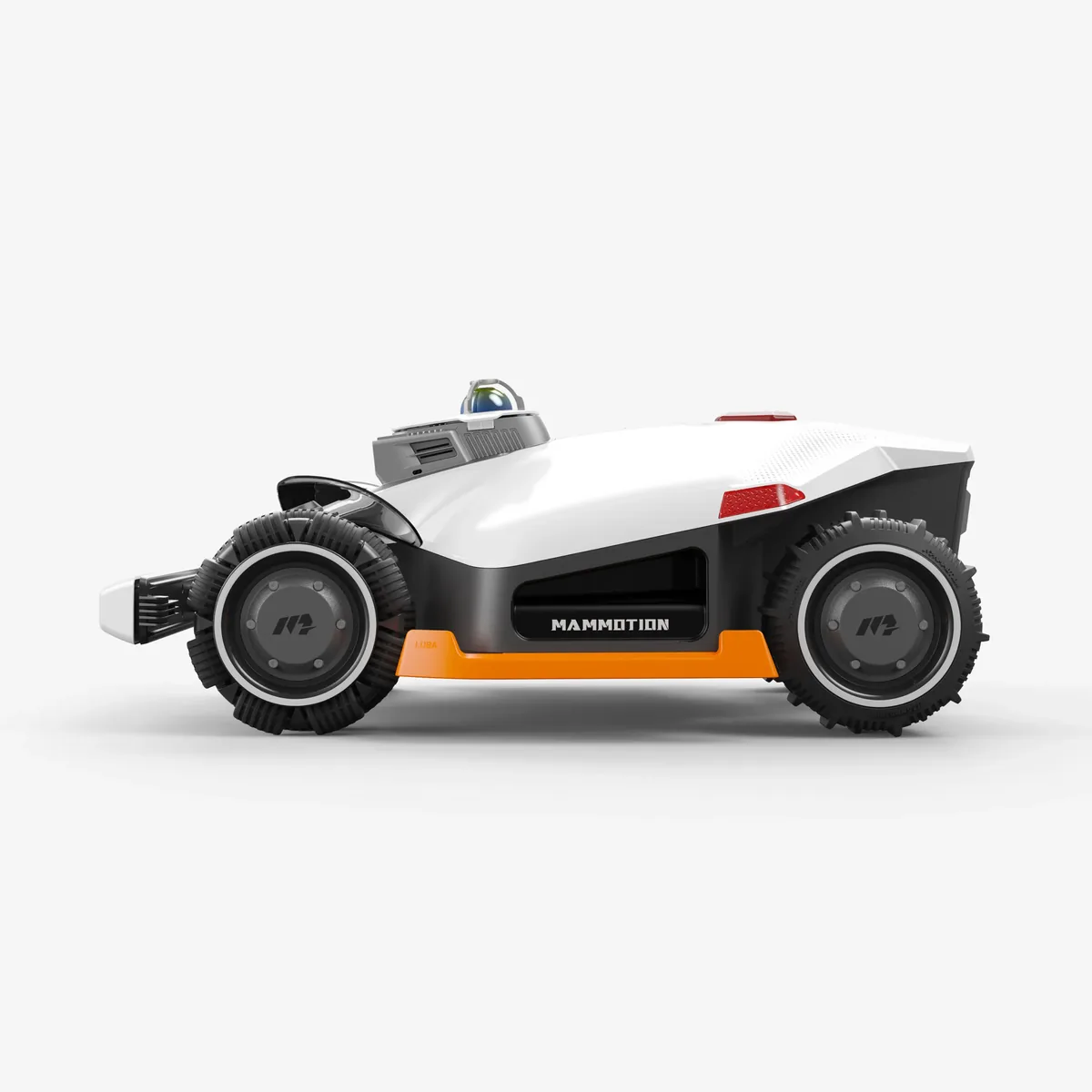
Mammotion Luba 3 AWD
The Luba 3 AWD is Mammotion's 2026 flagship and the mower that finally fixed the Luba's biggest headache: there is no RTK antenna to mount. It positions with a 360-degree LiDAR dome, two AI cameras and free NetRTK corrections pulled over Wi-Fi or its built-in 4G, and owners on wooded lots say it maps and mows under tree cover where the Luba 2 used to wander. The rest is familiar Luba: four hub motors and omni wheels that climb 80 percent slopes, a 15.7 inch dual-disc deck with 165 W motors on the 3000 and 5000, and up to 50 zones. The 3000 is the sweet spot at $2,109 on sale (it is oddly cheaper than the 1500), and it comes in a 2.2 to 4.0 inch high-cut or 1.0 to 2.7 inch standard deck. Owners praise the setup and the app, and the common gripes are learning menus that keep changing with OTA updates, a 1.25 acre map cap on the 5000, and the occasional unit that dies after a firmware push with slow support. Against the Roborock RockMow X1 LiDAR it costs less and cuts wider; against a Husqvarna 450X NERA it is a fraction of the price with no dealer install. Best for half-acre and larger lawns with hills, trees and several zones.
Mammotion
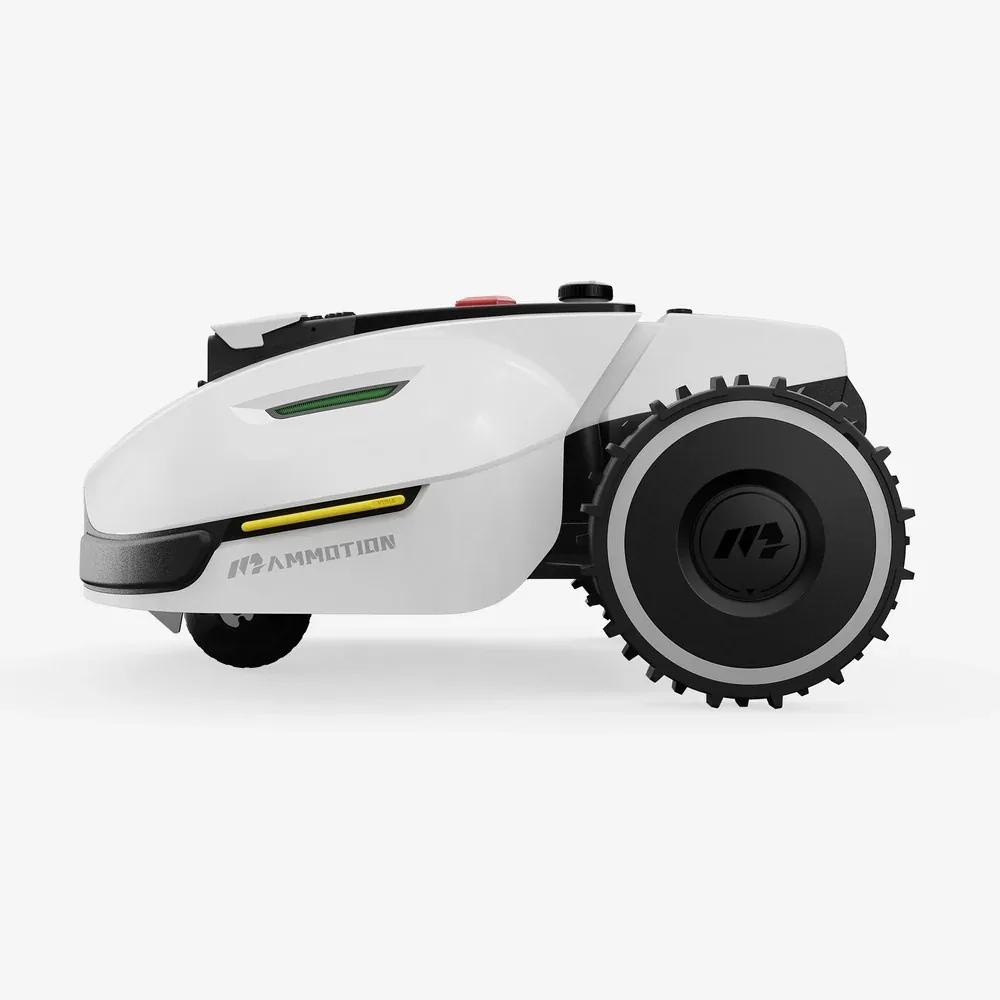
Mammotion Yuka
The Yuka is Mammotion's two-wheel-drive mower with a party trick nobody else has: an optional $700 sweeper cart that collects clippings and leaves, then dumps them at spots you pick in the app. The 12.6 inch dual-disc deck is nearly as wide as a Luba's, the 1.2 to 4.0 inch height range suits any US grass, and the 2025 lineup runs 1000, 2000 and 3000 square meters (a quarter to three-quarter acre). Positioning is an included RTK station plus a front AI camera; owners with open lawns love it, while a vocal minority in tree-heavy neighborhoods say it simply cannot hold position without clear sky, so this is not the pick for a wooded lot. Rear-wheel drive also means it bogs on rough or soggy ground, and the sweeper, while clever, gets stuck now and then. Mammotion's US store no longer lists the Yuka (the LiDAR-based Yuka mini 2 is its future), but Home Depot and Best Buy still stock it, with the 3000 around $1,449 on sale. If you want an AWD alternative at similar money look at the Luba 2 AWD X clearance; if you want a station-free RWD mower for a small yard, the Yuka mini 2. Best for flat, open lawns up to 3/4 acre with heavy leaf drop.
Roborock
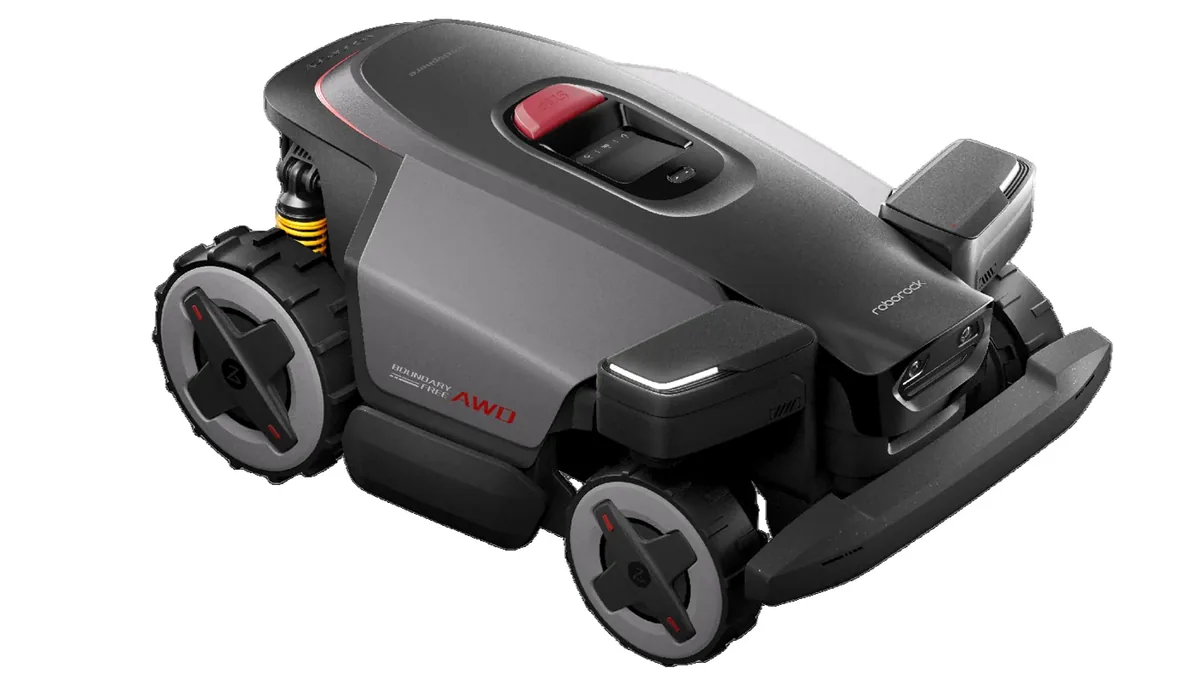
Roborock RockMow X1
Roborock's first lawn mower landed in the US in March 2026 as the RockMow X1 (it is the Z1 everywhere else), and it is built like the robot vacuums that made the brand: overbuilt, quiet and very good at driving. Four hub motors, active front steering and dynamic suspension let it climb 80 percent grades and roll over 3 inch bumps without tearing turf, and owners say the first thing they notice is how silent it is. Positioning is full-band RTK from an included antenna plus four cameras, with a headlight so it can finish after dark. The X115H covers 0.37 acres and the X130H is rated to an acre per charge; both share a 9.5 inch deck and a 1.6 to 3.5 inch app-set height. Early owners like the mapping and app but call the software a work in progress: obstacle avoidance detours widely, zone passages need more room than the stated 2.6 feet, and the PreciEdge module that gets within 1.2 inches of borders is a $150 add-on. Amazon is the main US retailer, and the X115H has already dipped to $1,500 from $2,299. Against the Mammotion Luba 3 you trade a wider deck and LiDAR for a heavier chassis with better steering; against the Navimow X3 you gain AWD. Best for hilly, rutted yards up to an acre where traction matters more than edge precision.
Roborock
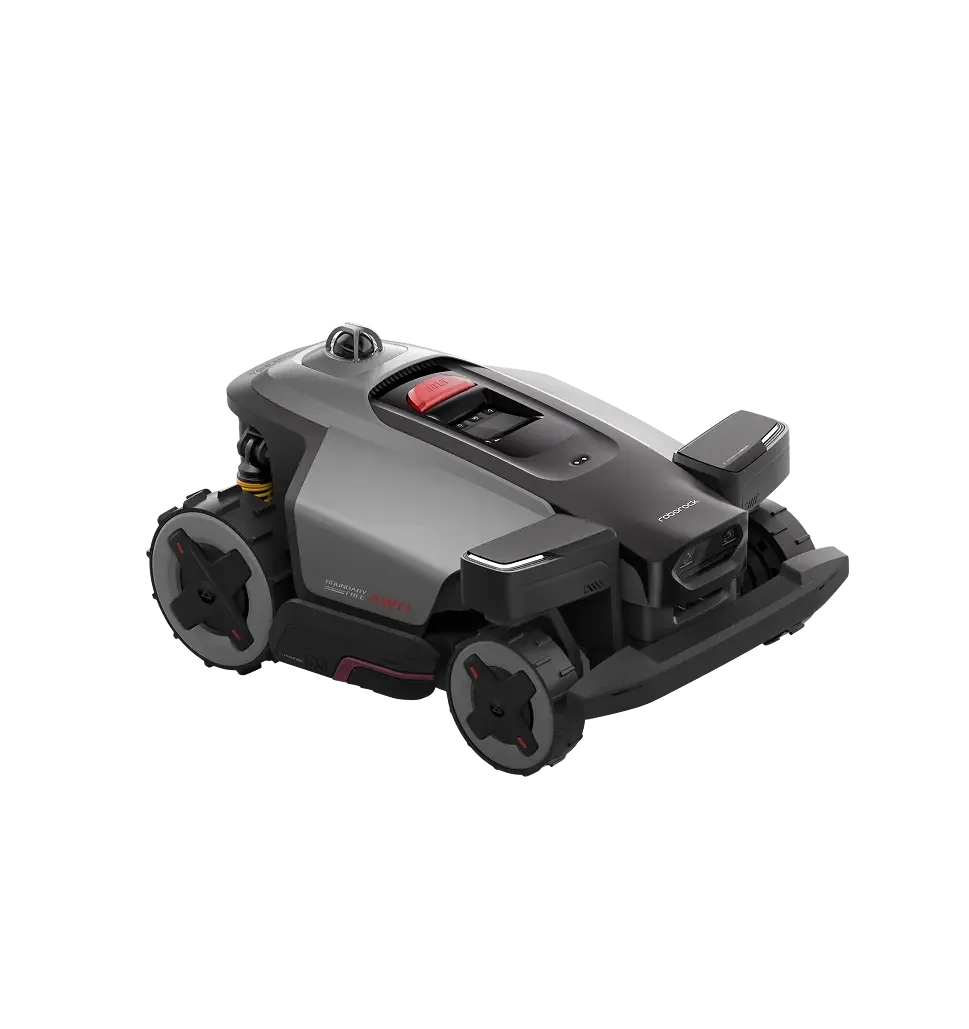
Roborock RockMow X1 LiDAR
The RockMow X1 LiDAR (model X120H) is the RockMow X1's AWD chassis with a spinning LiDAR dome on top and no RTK antenna in the box. That is the whole pitch: if your lawn is hemmed in by trees, fences and a two-story house, satellite RTK mowers spend half their time hunting for a fix, whereas this one builds a 3D map of the yard and mows in straight, systematic lines regardless of sky. It launched in the US in July 2026 at $3,199 list, with a $2,499 opening deal that has since ended, and it is rated for 0.49 acres, 80 percent slopes and 3.1 inch obstacles with the same 9.5 inch six-blade deck and 1.6 to 3.5 inch app-set height as its siblings. Lab reviewers praised the navigation, the quiet motor and a clean cut, but found the obstacle avoidance weak (it drove straight over hoses and balls that cheaper mowers dodged), the AI auto-mapping non-functional at launch, and edge results disappointing even with the $150 PreciEdge module because the software keeps a wide margin. It costs more than a Mammotion Luba 3 AWD 3000, which has LiDAR, NetRTK and a wider deck, and about the same as a Dreame A2 with far less edge precision. Best for half-acre lawns with terrible sky view and real slopes, for buyers who trust Roborock to finish the software.
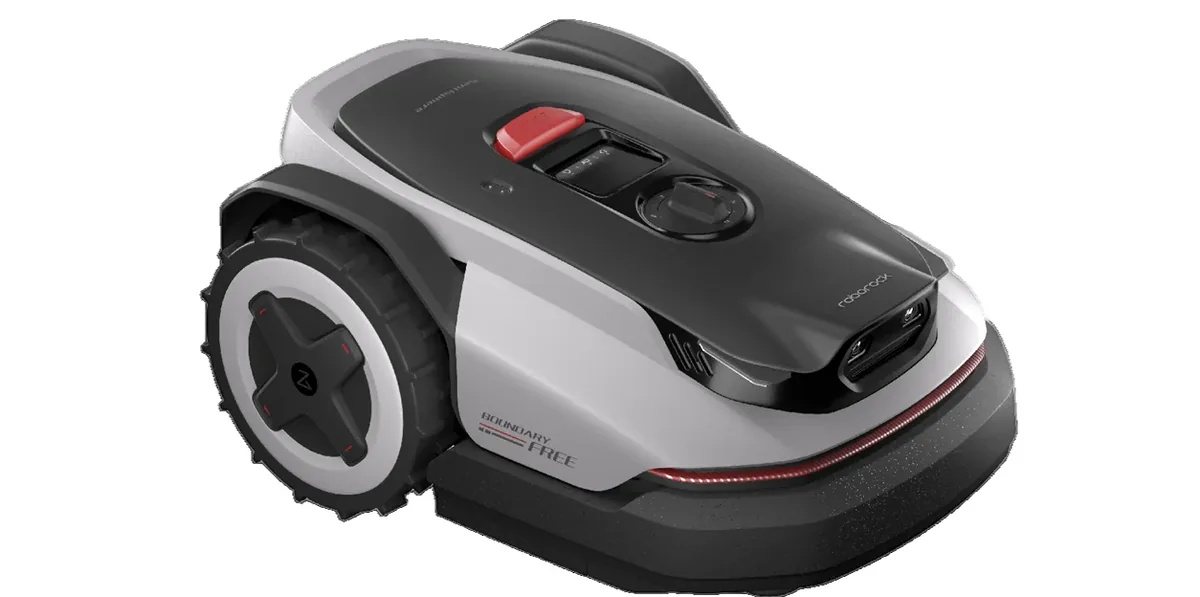
Roborock
Roborock RockNeo Q1
The RockNeo Q1 (Q110H in the US) is Roborock's entry mower: a 27 pound, rear-wheel-drive machine for quarter-acre lawns that lists at $1,299 but has been selling on Amazon for $800 to $1,000 most of the summer. It uses the same full-band RTK antenna plus camera VSLAM as the RockMow, and Roborock later pushed a network RTK mode so you can skip the antenna if you have decent cell coverage. Owners describe it as whisper quiet, good at systematic back-and-forth mowing of open lawn, and nicer to map than Segway's app, and they like the headlights for evening runs. They are also blunt that it is for simple, flat, easy yards: the plain wheels get stuck if it wanders onto rock beds or sand, it struggles on real slopes despite the 45 percent rating, and it needs a wide-open view of the sky to hold position. Cutting height is a manual dial from 1.6 to 3.1 inches, edge cutting needs the $90 PreciEdge module, and even with it the software keeps a cautious margin around anything hanging over the lawn. Compared with a Navimow i105 it is quieter and maps better; compared with a Mammotion Yuka mini it needs an antenna but climbs about the same. Best for flat, open quarter-acre lots where price and quiet matter most.
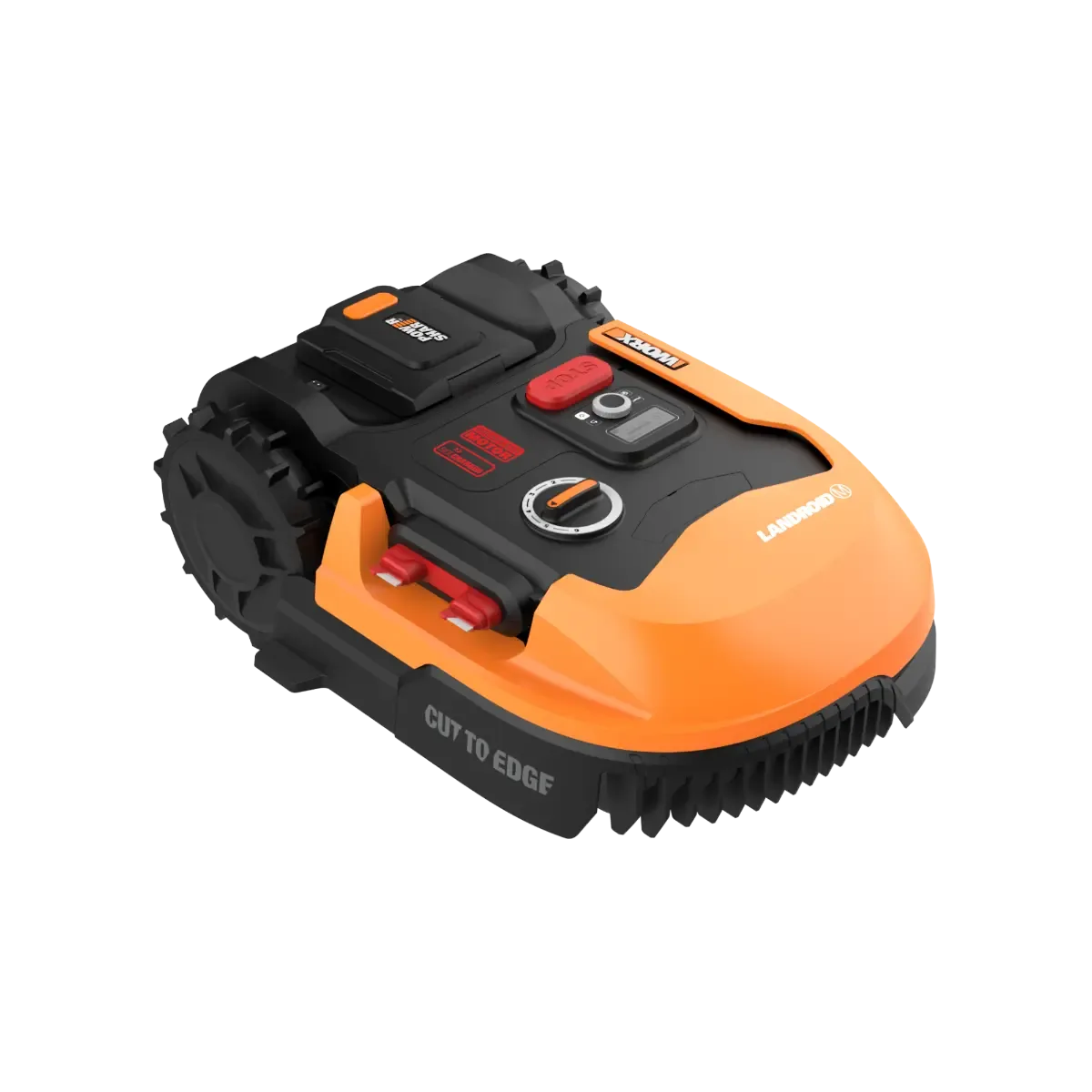
The Landroid M is Worx's quarter-acre boundary-wire mower and, thanks to the 20V Power Share battery it shares with every other Worx tool, it is usually one of the cheapest ways into robot mowing that still comes with a real app. Worx lists it at $1,199.99, but it sells for around $900 on Amazon and Walmart has been clearing it below $800, so shop around. Setup is the classic wire job: 820 feet of wire and 340 pegs are in the box, and plan on an afternoon of pegging. Once running, the AIA algorithm handles narrow passages without a guide wire, the off-center blade genuinely cuts to the edge, the floating blade disc lifts over bumps, and at 59 dB it is quiet enough to run at night. The catch is what it lacks: no camera or ultrasonic sensor in the box, so it bumps into anything the wire does not exclude, and there is no GPS tracking unless you buy the Find My Landroid module. Against the Gardena SILENO flex at $599 you pay more for a 3.5 in top cut height and Wi-Fi control; against the wire-free Landroid Vision you save several hundred dollars but do the wire work yourself. Best for flat, fairly open yards under a quarter acre owned by someone who already has Worx batteries in the garage.
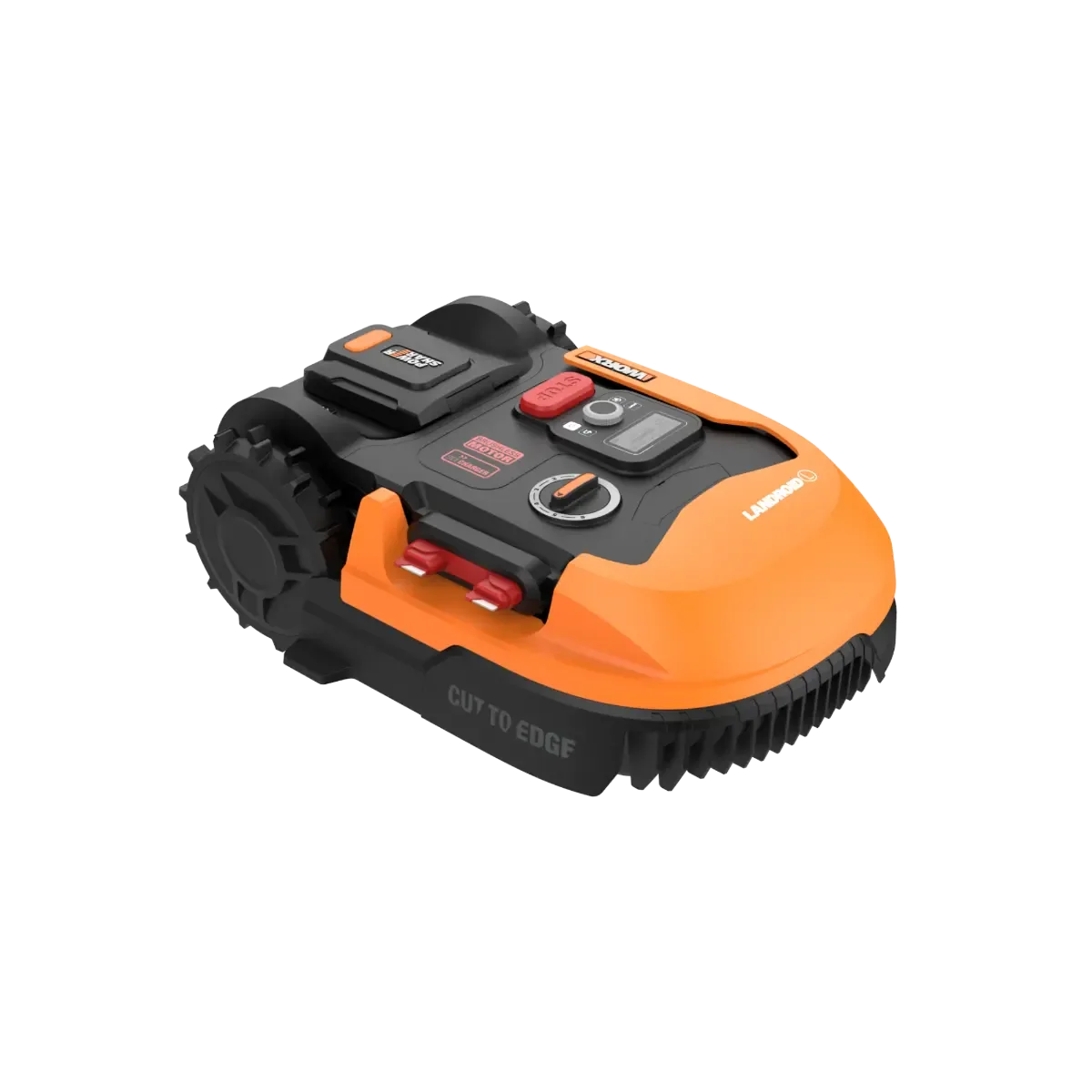
The Landroid L is the half-acre version of the Worx wired platform: same chassis logic as the M, a wider 8 in blade disc and a bigger 5.0Ah (some kits ship 6.0Ah) 20V Power Share pack that swaps into any Worx tool. Worx lists it at $1,499.99 but it has been sitting near $1,000 on Amazon and under $750 at Walmart, which makes it the cheapest half-acre robot from a brand with a US support line. Expect four to six hours laying the 820 ft of included wire. In use it is a bump-and-turn random mower with Cut to Edge, a floating blade disc that copes with lumpy ground, a rain delay, and a 30% slope rating that reviewers flag as the lowest in its class, so skip it on rolling terrain. Reviewers report roughly an hour of mowing per charge, so a full half acre means several dock trips a day and a schedule that runs most days. Obstacle avoidance is a bumper unless you add the ACS ultrasonic kit. Compared with a Husqvarna Automower 415X you give up polish and dealer support for roughly half the price; compared with a Segway Navimow at similar coverage you keep the wire but keep $700 in your pocket. Best for budget-minded owners of flat, open half-acre lawns who would rather spend a Saturday pegging wire than pay for RTK.
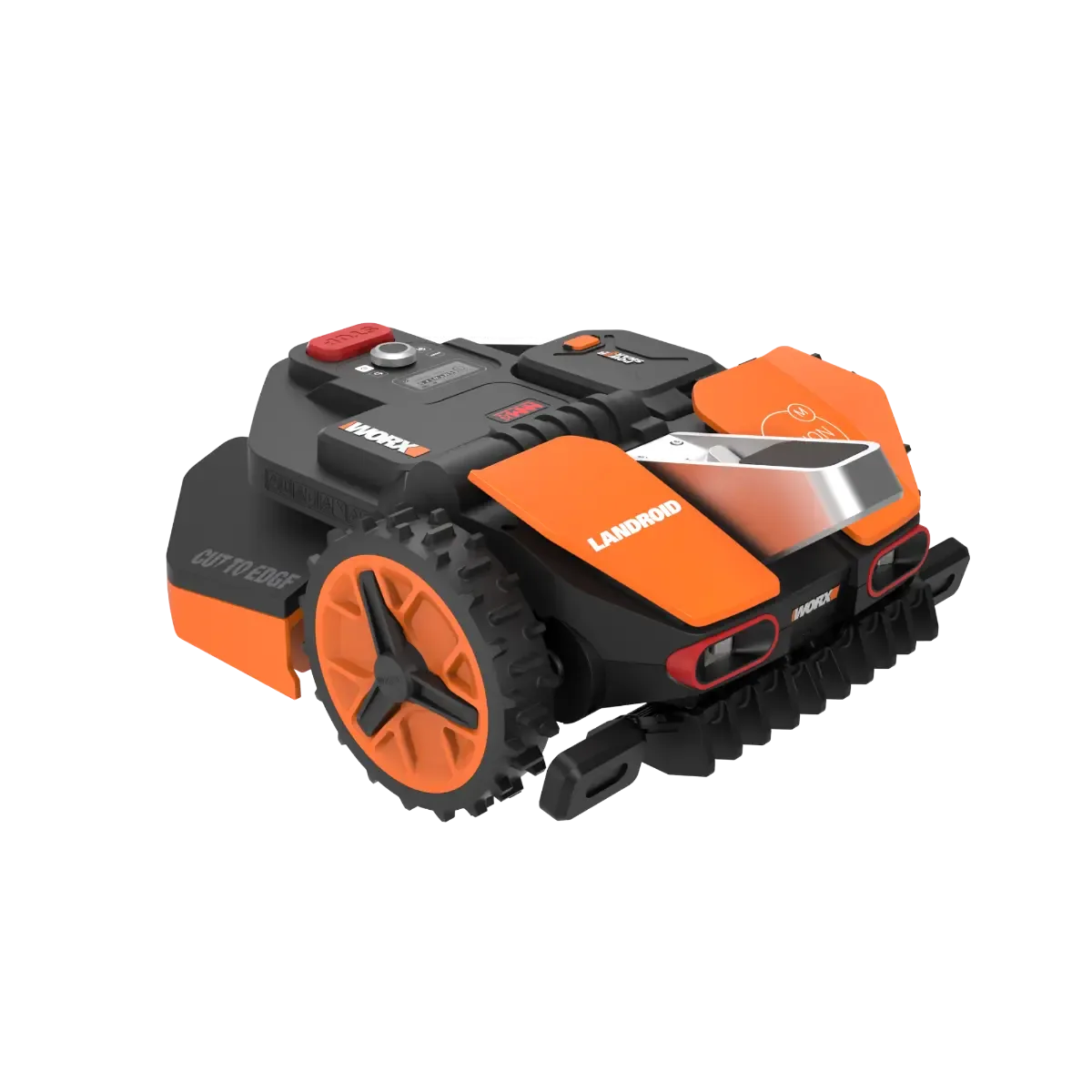
Landroid Vision is Worx's answer to the boundary-wire chore: no wire, no RTK antenna, no mapping drive. You set the dock on the grass, press go, and a 140-degree HDR camera with an onboard neural net decides what is lawn and what is not, treating the edge of the grass as the boundary. The 1/5-acre WR208 is the entry model; the WR210 is the same 33 lb machine rated for a quarter acre at $1,999.99 list. Pricing is all over the place: Worx lists the WR208 at $1,599.99, Amazon has it around $1,350, and Target and Worx have run it at $799.99. In use it is quiet at 59 dB, cuts to the edge with an offset blade, and will stop for pets, toys and hoses lying on the ground. Reviewers found the downward-pointing camera misses things above its sightline (a parked trailer, a playground slide) and that it needs a visible edge: where lawn meets mulch or a neighbor's grass without a curb, you stake down the included magnetic strip. Separate lawns need RFID tags and usually a carry between them. Versus an Eufy E15 or Segway Navimow i105 at similar money this is simpler to install but less precise and it mows in a random pattern; versus Worx's newer Landroid Vision Cloud (RTK plus camera, $1,799.99) it gives up mapping and systematic rows. Best for small, well-defined lawns where nobody wants to bury wire or plant an antenna.
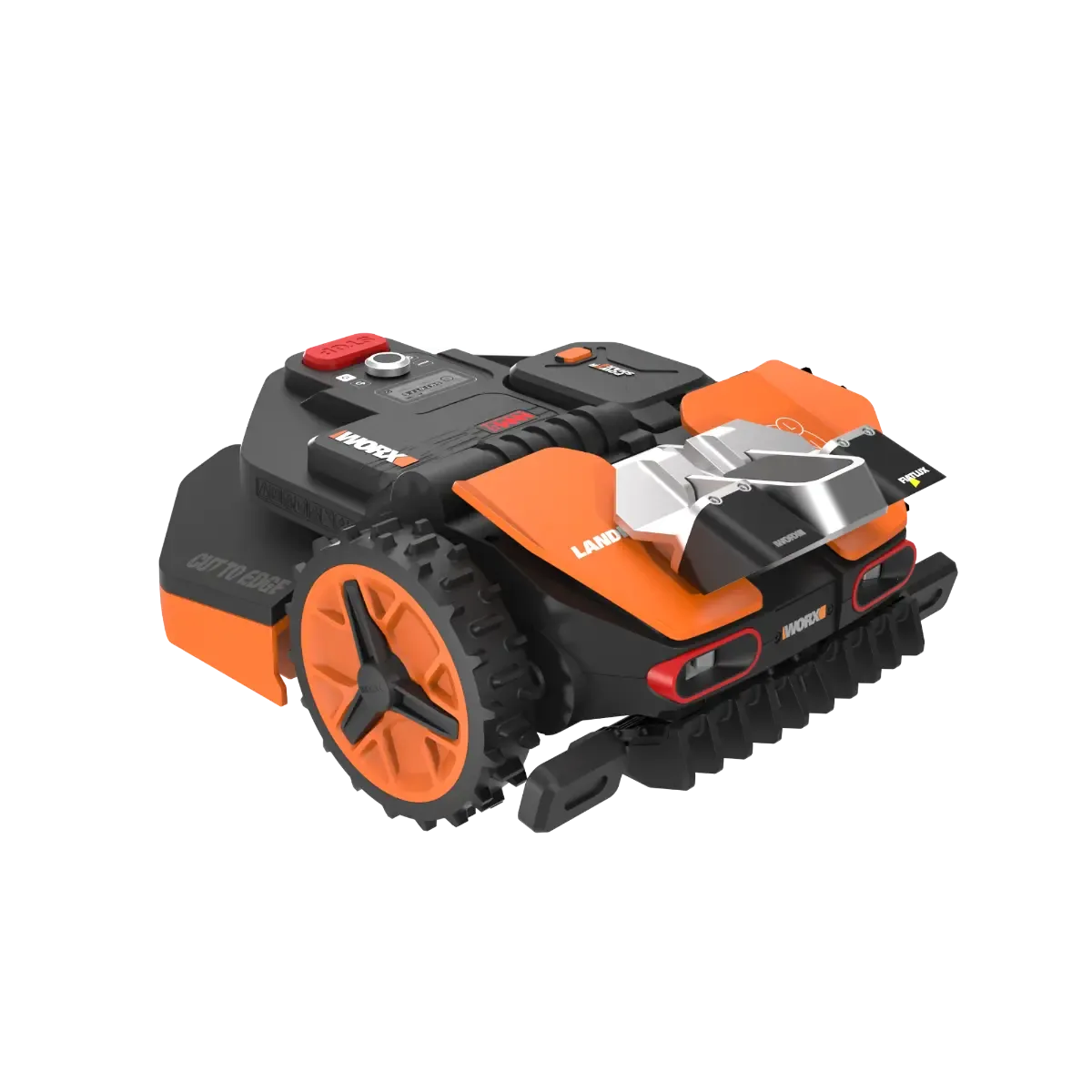
This is the bigger-lawn Vision, sold as the WR220 for half an acre with 3/4-acre (WR230) and 1-acre (WR235) siblings that share the same 33 lb body and 20V 4.0Ah pack and simply get longer daily schedules. List is a steep $2,499.99 to $3,499.99, and Worx has run the WR220 as low as about $1,100 during clearance, so watch for promos before paying full price. The pitch is identical to the smaller WR208: no wire, no RTK base station, no mapping session; the 140-degree HDR camera reads grass versus not-grass and treats that line as the boundary, while the same camera recognizes people, pets and objects on the ground and steers around them. It cuts to the edge with an off-center blade, has a rain sensor, and the optional Find My Landroid module adds 4G tracking. The compromises grow with the lawn: random-pattern mowing means it needs many more hours per week than an RTK mower to cover the same ground, split lawns still need RFID tags and a carry, and the camera struggles wherever there is no clear visual edge. For a half acre and up, a Mammotion Luba Mini AWD or Segway Navimow X3 will finish faster and mow in rows, and Worx's own Vision Cloud WR320.1 ($1,799.99) adds RTK for less money. Best for large, simple lawns with obvious edges where zero installation matters more than mowing speed.
Greenworks
Greenworks AiMowbot C30Z
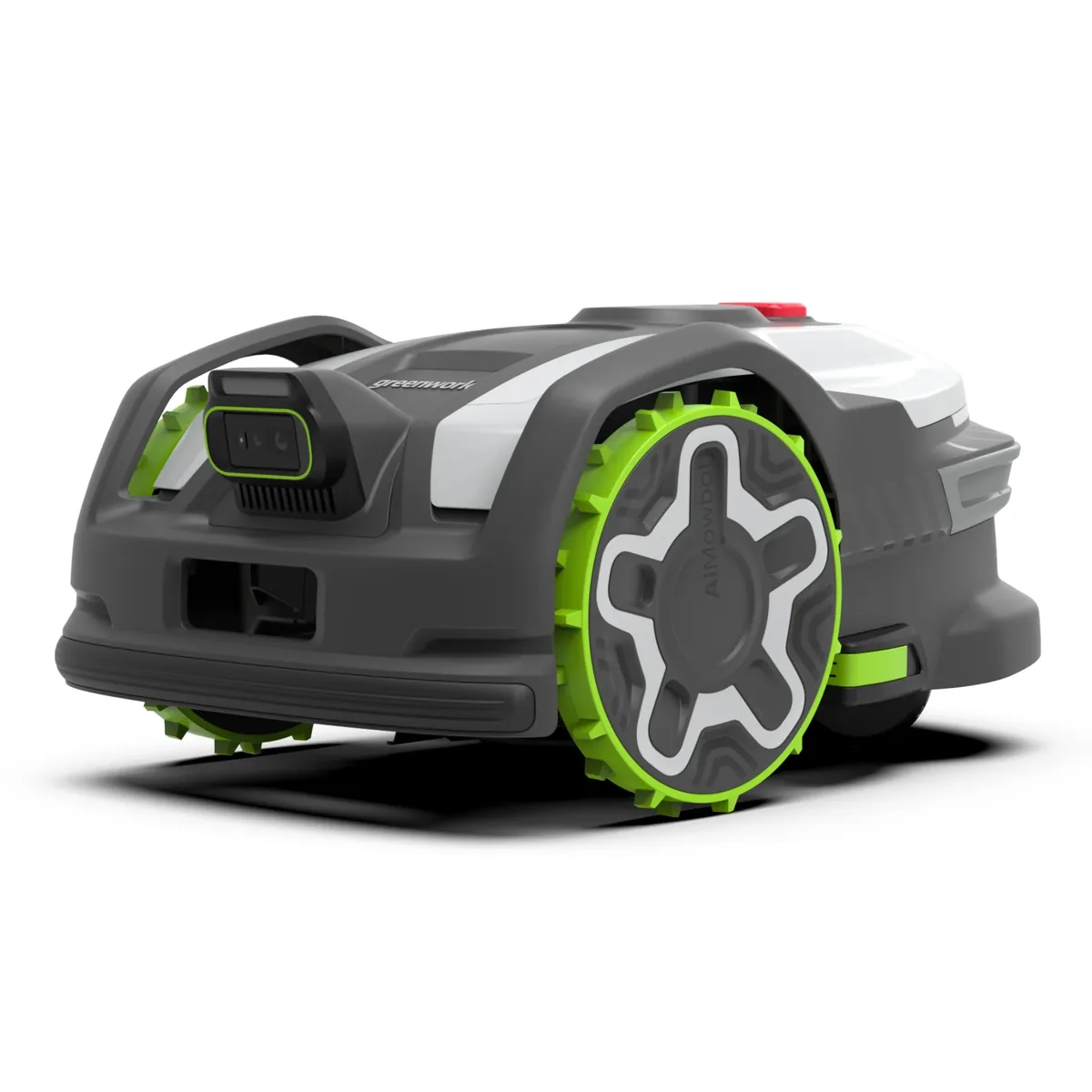
Greenworks retired the wired Optimow line for consumers in 2026 and replaced it with AiMowbot, and the C30Z is the 3/4-acre model in the front-wheel-drive C series. It uses what Greenworks calls RTKVision 2.0: an RTK reference antenna kit in the box for roughly 1 in positioning, with cameras and night-vision sensors that help it hold its line under trees and spot 200-plus obstacle types. Mowing zones, paths and no-go areas are drawn in the app; there is no wire to bury. The spec sheet is strong for $1,599.99: 45% (24 degree) slopes, an electric height adjuster from 0.75 to 3.5 in, a 54 dB noise rating, IPX6 washdown, LED headlights and a 50-minute charge. It is a front-wheel-drive three-wheeler, so it is not a Luba-style AWD climber, and the 8 in cut is narrower than a Mammotion Yuka's. Two things to weigh before buying: 4G and anti-theft tracking need a subscription Greenworks has not priced publicly, and edge cutting is rated at 4 in from the border, so keep the string trimmer. The 1/2-acre C20 ($999.99) and 1-acre C40 ($1,499.99) are the siblings and the G series adds AWD. It is a 2026 launch with no owner track record yet, which is worth remembering given how much grief the old Optimow app caused. Best for 1/2- to 3/4-acre yards with moderate slopes and a buyer who wants a 3-year warranty behind a wire-free mower.
Greenworks
Greenworks Optimow 33H
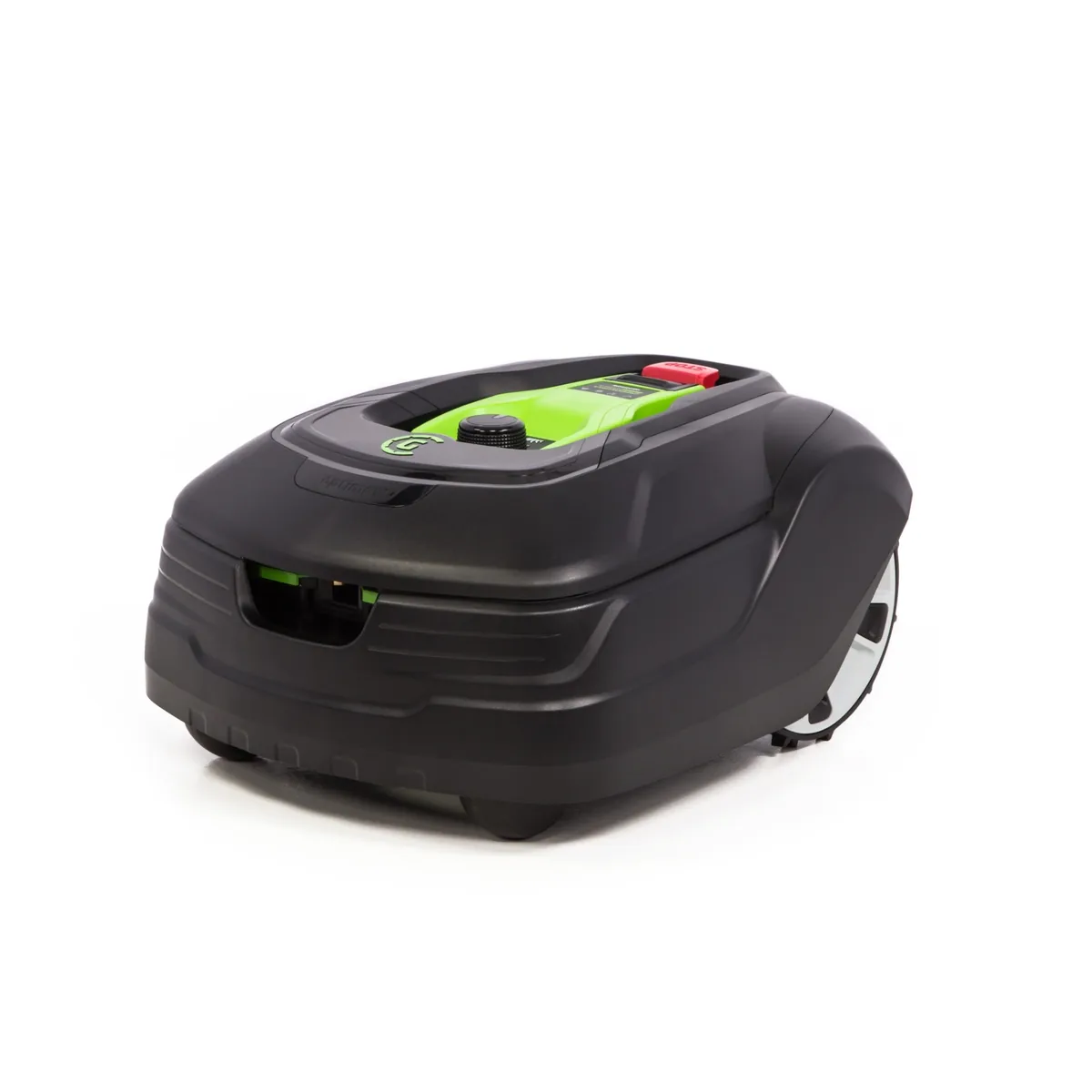
The Optimow 33H is Greenworks' one-third-acre boundary-wire mower, now sold through the Greenworks Commercial dealer network rather than big-box stores; the online store lists it at $1,099.99 and sold out, so a local dealer is the realistic route. The H means high cut, 2.4 to 4.0 in, which suits fescue and Kentucky bluegrass lawns that the 0.8 to 2.4 in Optimow 33 would scalp. Mechanically it is a conventional Husqvarna-style platform: boundary wire plus guide wires, a random bounce pattern, three pivoting razor blades on an 8.7 in disc, a 24V battery, 130-minute recharge, IPX5 washdown and a 19 degree (about 34%) slope rating. Its differentiator is built-in 4G with GPS: the GreenGuide app works from anywhere and the mower can be tracked if it walks off. Owners of the sibling Optimow 50H on Best Buy like the cut but call the app frustrating, and the cellular plan is only prepaid for two years before an annual fee kicks in. There is no edge-cut mode and no camera, so it bumps its way around obstacles. Against a Husqvarna Automower 310 Mark II it is cheaper with a longer warranty, but dealer-only availability and the app complaints keep it from being an easy pick. Best for a flat to gently sloped third-acre lawn within reach of a Greenworks dealer.
Gardena
Gardena SILENO flex
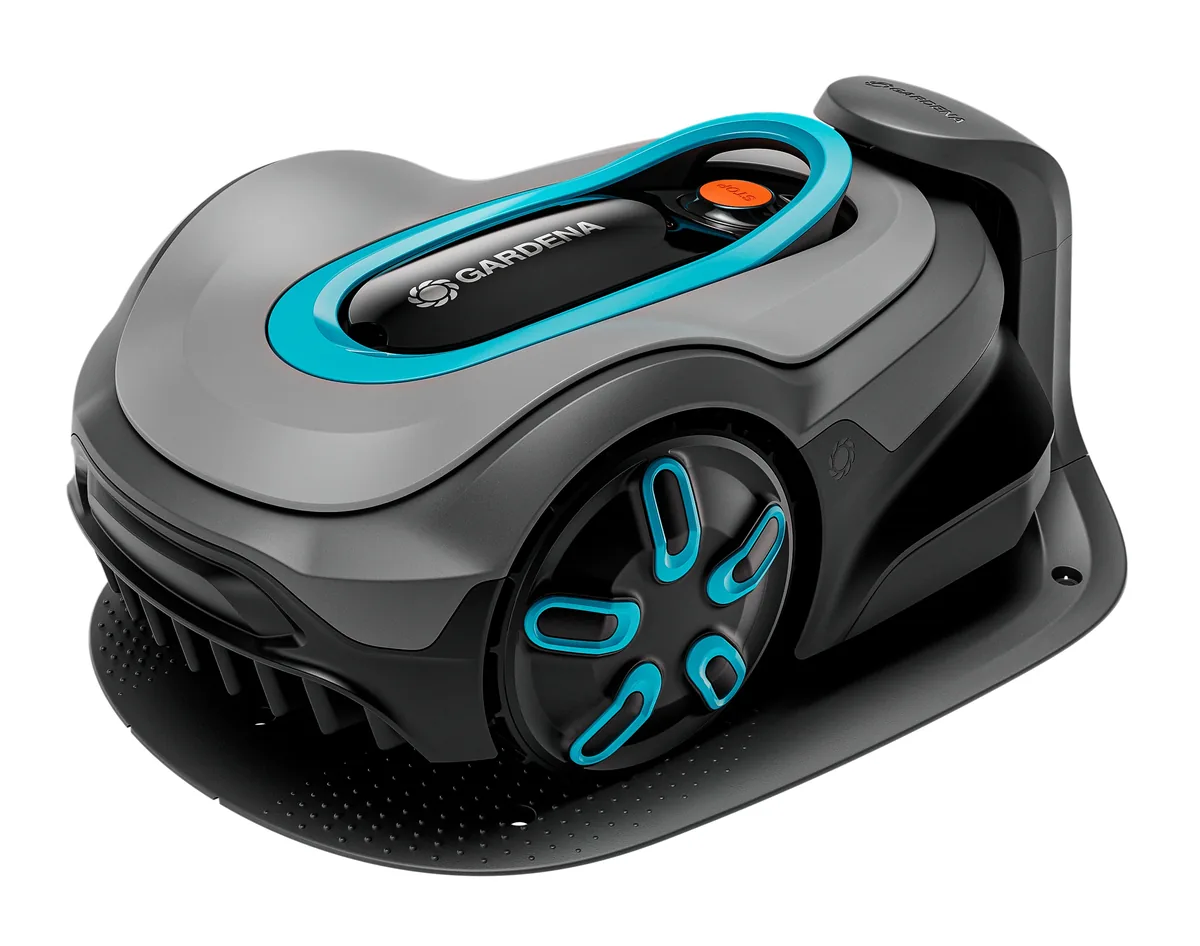
The SILENO flex is Gardena's 2025 redesign for the US and, at $599, the cheapest wired mower here from a major brand. It fixes the biggest complaint about the older SILENO City and Life: cut height now runs 1 to 4 in instead of topping out at 2 in, so it finally suits cool-season American lawns. Coverage is up to 8,600 sq ft, slopes up to 35%, and a 10 in cut on an 18V 3.6Ah pack gives about 90 minutes of mowing per 60-minute charge. Navigation is boundary wire plus a guide wire, which is still the most precise way to keep a robot out of the flower beds and lets it thread narrow corridors. It mows in the rain (there is no rain sensor by design, only a frost sensor), is quiet at 60 dB, and is hose-washable. The trade-offs are Gardena's usual ones: the app is Bluetooth-only with roughly a 33 ft range, so no remote start, notifications or GPS, and obstacle handling is a bumper. Anti-theft is a PIN plus a lift alarm. Versus the Worx Landroid M (around $900 street) you get a taller cut and a lower price but lose Wi-Fi control; versus a wire-free Segway Navimow i105 at $999 you give up couch control for a system that never loses satellite lock. Best for small, complex lawns under 0.2 acre where a wire is acceptable and quiet matters.
Gardena
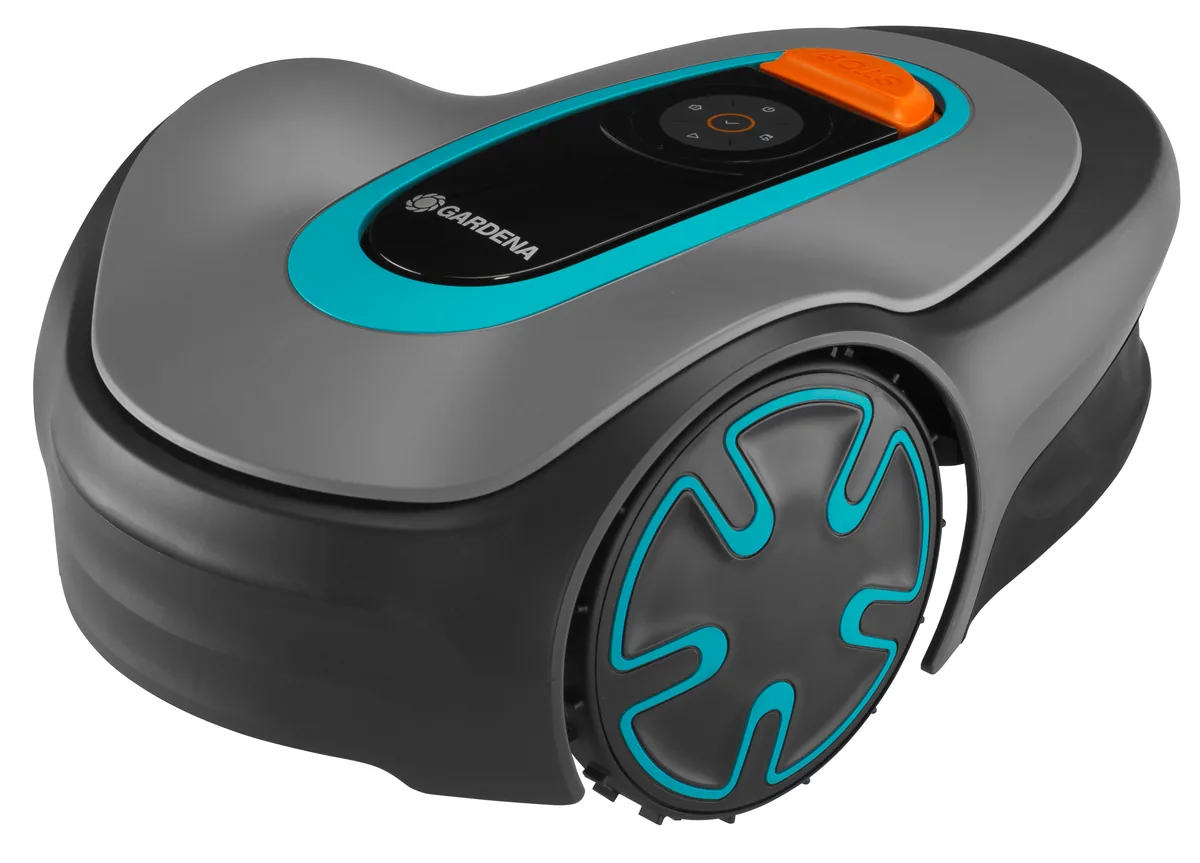
Gardena SILENO minimo
The SILENO minimo is Gardena's smallest, quietest mower and, at about $530 on Amazon, the cheapest way to get a European-built robot onto a tiny lawn. It is rated for 2,700 sq ft, climbs 35%, and at 57 dB is about as loud as a refrigerator, so nobody will notice it running at 2 am. Setup is boundary wire and a single guide wire; CorridorCut lets it pass through gaps down to about 24 in, and SensorControl adjusts how often it mows to how fast the grass is growing. It runs about 65 minutes per cycle on its 18V pack and recharges in 75. Now the limits: cut height maxes out at 1.8 in, which is too short for fescue or bluegrass and really aims it at Bermuda, zoysia and other warm-season grass; the app is Bluetooth-only with a 33 ft range, so no remote start or alerts; there is no rain sensor (it simply mows wet), no edge mode, and obstacle handling is a bumper. Gardena has shifted its US lineup to the SILENO flex ($599, 1 to 4 in cut, 8,600 sq ft), and the minimo appears to be selling down remaining Amazon stock, so treat it as a closeout buy rather than a long-term platform. Against a Worx Landroid S it is quieter and cheaper but far less connected. Best for a postage-stamp warm-season lawn where silence and price beat features.
Sunseeker
Sunseeker X7 Plus
The X7 Plus is the long-range version of Sunseeker's AWD X7: same 14 in dual-disc deck, same 70% slope rating, same RTK-plus-camera AONavi navigation, but a higher-capacity battery that lets it schedule 1.5 acres instead of 0.75. List is $2,999.99 at Sunseeker (frequently sold out) and dealers such as Robotic Mower Services sell a Gen 2 at $2,799.99; the Amazon listing has been unavailable for a while. That undercuts a Mammotion Luba 2 AWD 5000 by several hundred dollars for similar coverage and traction. In practice it is a systematic-row mower with 100 zones, virtual walls and no-go areas, edge trimming to about 1.2 in, a rain sensor, and 4G tracking with a geofence lockout. Reviewers who ran the standard X7 praised the AWD on lumpy, sloped ground and the way the twin cameras learn the yard over a few passes, and criticized the app (a single joystick for mapping, thin documentation, schedules that are easier to leave in auto mode). Obstacle avoidance is good for people, pets and toys, but small low objects like a softball can be run over, and like every RTK mower the reference station needs open sky. At 60 dB it is quiet for a 31 lb machine with two spinning discs. Best for hilly 1 to 1.5 acre properties where AWD matters and the buyer is fine trading Mammotion's app polish for a lower price.

Kress is the Positec sister brand to Worx, but its RTKn mowers are a dealer product, and the KR172 is the half-acre entry point at $1,699.99 (list $2,499.99). The pitch is simple: satellite RTK without the antenna. Instead of a base station in your yard, Kress runs its own network of reference antennas hosted at dealers and pipes corrections to the mower over 4G, so setup means drawing a boundary in the app rather than hunting for a spot with clear sky. When trees or the house block satellites it falls back on inertial navigation and odometry, and it mows in straight parallel stripes rather than the random bounce of a Robomow or older Husqvarna. Specs are modest: an 8-inch cut, 1.6 to 3.5 inch height range, 40 percent slopes, 59 dB and about 26 pounds, with a 4 Ah 20 V battery and 0.5 acre recommended (0.7 acre maximum). What you do not get is camera obstacle avoidance; that is reserved for the OAS variant and pricier Kress models, so this one relies on its bumper and your no-go zones. The catch is coverage: RTKn only works if a Kress dealer antenna is within range of your address, so the dealer has to confirm that before you buy, and you are tied to that dealer for service. Against a Segway Navimow i110 you pay more for the no-antenna convenience and stripes. Good for a suburban half acre near an established Kress dealer; skip it if nobody nearby carries the brand.
STIHL
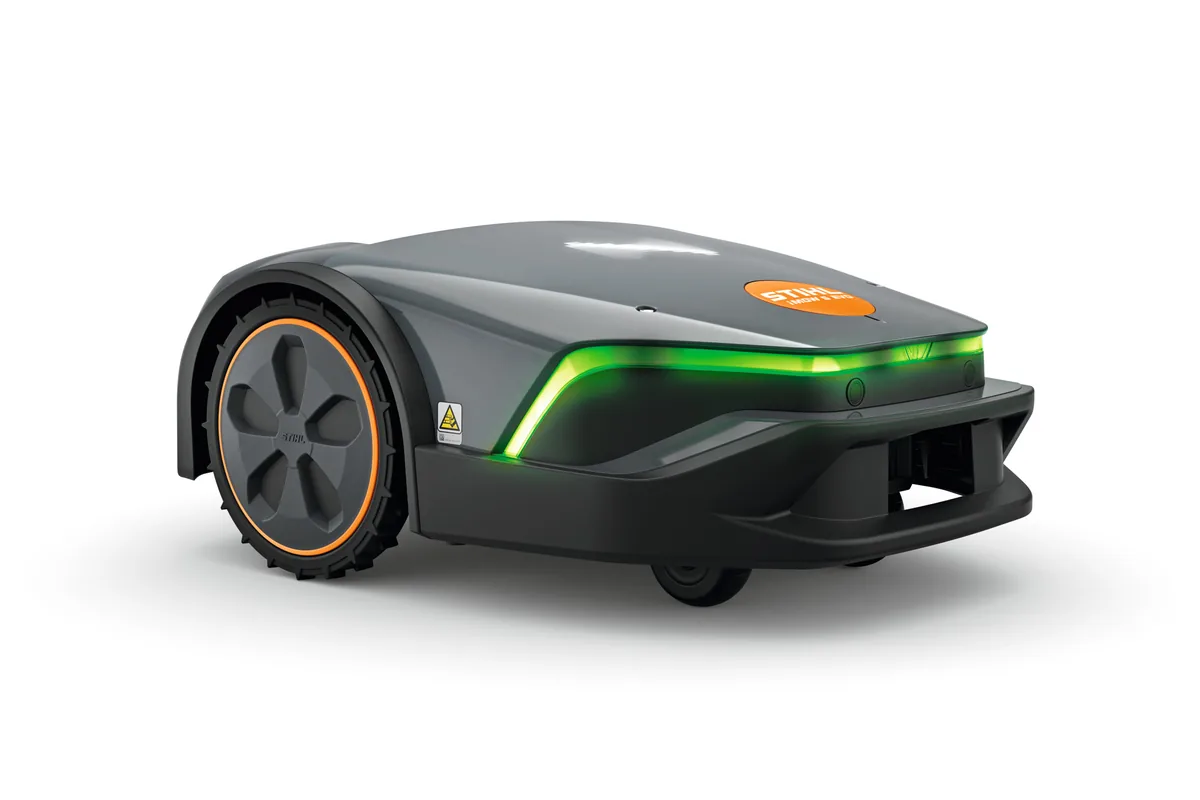
STIHL iMOW 5 EVO
STIHL's iMOW EVO line replaced the old Viking-era iMOWs in Europe in 2023 and reached US dealers in 2024, and the 5 EVO is the smallest of the three (the 5, 6 and 7 EVO cover roughly 0.37, 0.74 and 1.25 acres). It is a boundary-wire mower, so someone has to lay perimeter and guide wire, but once that is done it is one of the more polished wire machines around: an 11-inch disc with three free-swinging blades, electric height adjustment from 0.8 to 2.4 inches, 45 percent slopes (55 with the optional Kit 10 wheels), ultrasonic sensors that slow it before it bumps anything, a rain sensor you can tune, and a mobile network module built in so the MY iMOW app works away from home. It is quiet (61 dB sound power, 48 dB pressure) and light at 33 pounds. T3's reviewer called it outstanding on cut quality but was annoyed by app logouts and by its inability to cut flush to raised edges, a limit of any wire mower. Runtime is short, 65 minutes per charge with a 140-minute full recharge, though STIHL rates it for 1,500 square meters over a week of cycles. At about $2,530 through STIHL dealers and Ace, it costs more than a wire-free Segway Navimow i110 that covers the same area with no wire, so the case for it is dealer install, dealer service and STIHL build quality rather than technology. Best for someone who already has a STIHL dealer they trust and does not want to fuss with RTK antennas.
Ambrogio
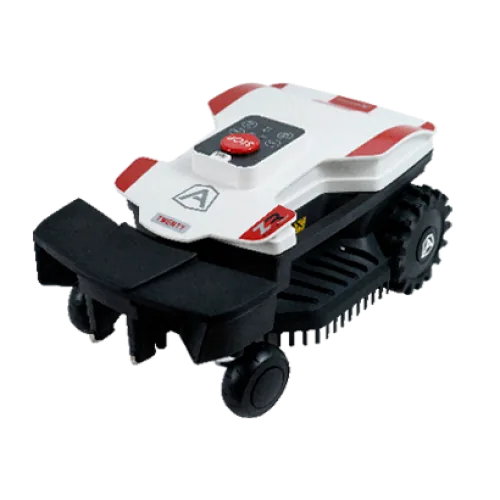
Ambrogio Twenty ZR
Ambrogio is the Italian dealer brand (Zucchetti) that landscapers respect, and the Twenty ZR is its oddball: a small mower that needs no perimeter wire, no RTK antenna and no camera map. Instead it uses radar plus grass-humidity sensors to recognize where the lawn stops, turning back when it meets paving, mulch beds or gravel, and mows the interior in a random pattern like a classic Robomow. That makes it the fastest install here, minutes rather than a weekend, but it only works if your lawn has a physical border everywhere; where grass simply continues into a neighbor's yard it will keep going, and Paradise Robotics is upfront that objects need to be about 6 inches tall for the radar to see them. It is a quarter-acre machine at heart: a 7-inch blade, 1 to 2.8 inch cut range, 45 percent slopes (20 percent near edges), 59 dB, a 5 Ah battery good for about four hours, and just 16.5 pounds. At about $1,799 through Paradise Robotics or GL Robotics, with an optional $699 4G Connect module for remote control and GPS theft tracking, it costs as much as a Segway Navimow i110 that maps a full acre with cameras and RTK, so buy it for the zero-install idea and the dealer relationship, not for value. A tidy, fully bordered quarter acre with an owner who refuses to run wire is the right home for it.
Before you buy your first one
The questions that come up in every owner thread, answered without the marketing layer.
Do robot mowers still need a boundary wire?
Not anymore, but the wire hasn't gone away either. Boundary-wire mowers (Husqvarna's Automower line, Gardena, most Worx Landroids) follow a perimeter wire you pin or bury around the lawn and every flower bed. Wire-free mowers navigate by RTK GPS, cameras, LiDAR, or UWB beacons instead, and you draw the boundary by driving the mower around the edge from your phone. Wire-free is faster to set up and easy to change; wire is cheaper, works under dense trees, and doesn't care about satellite signal. Which one is right depends almost entirely on how much open sky your yard has. Wire vs RTK vs vision, honestly →
Will a wire-free RTK mower work under trees or next to my house?
This is the question that decides most wire-free purchases. RTK needs the mower and its reference antenna to see a wide slice of open sky; heavy tree canopy, tall fences, and the strip along a two-story wall degrade the fix and the mower stops or wanders. The newer hybrids (Segway Navimow X3, Mammotion Luba 2 AWD X) fuse cameras and dead reckoning to bridge short shaded stretches, and LiDAR mowers like the Dreame A3 skip satellites entirely. If more than about a third of your lawn is under canopy, shop LiDAR or boundary wire and save yourself a return. How RTK actually works →
How big a lawn can a robot mower handle?
The rated area on the box assumes the mower runs nearly every day on an open, simple lawn with the base station in a good spot. Real yards have islands, narrow passages, slopes, and shade that eat into it, so the standing advice from owners is to buy a mower rated for 30-50% more than your actual grass area. The catalog runs from small-lot machines rated around a quarter acre to AWD flagships rated for several acres; filter by 'Lawn Size' above to see only the mowers rated for at least your lot. The full sizing walkthrough →
Can robot mowers handle slopes and hills?
Rear-wheel-drive mowers are typically rated for 20-35% grades (roughly 11-19 degrees) and lose traction on wet grass well before that number. All-wheel-drive machines from Husqvarna, Mammotion, and the tracked Lymow One Plus are rated 45-80%, which covers most residential hills. Two things the spec sheet hides: the slope limit at the boundary is usually lower than in the middle of the lawn because the mower has to turn there, and wet clay or freshly aerated turf cuts every rating in half. Slopes and terrain guide →
Are robot mowers safe around kids and dogs?
Safer than a walk-behind mower in the ways that matter: the blades are small pivoting razors under a wide skirt, lift and tilt sensors stop them instantly, and most models have bumper or camera obstacle detection. They are not toys, though. Keep kids from riding them, run the schedule while the yard is empty, and know that camera-based obstacle avoidance is good at dogs and lawn furniture and mediocre at garden hoses and dog toys. The universal owner complaint is not injuries; it's what happens when the mower drives through what the dog left behind. Pets, kids, and the first season →
Do robot mowers get stolen?
Less than people fear. Every mower in the catalog has a PIN lock and a lift alarm, and the ones with built-in cellular (Husqvarna's X-line, the Navimow and Mammotion 4G modules, most Ecovacs GOATs) add GPS tracking and geofence alerts. A stolen mower is bricked without the PIN and useless without its own base station, and thieves know it. The realistic risks are a mower that wanders into the street when a boundary fails and a base station left in reach of the sidewalk.
What does a robot mower really cost to run?
Budget for blades, a battery, and possibly a subscription. Replacement blades run a few dollars each and want swapping every one to two months in season; the small razor blades cost less than a Landroid or Luba blade set but wear faster. Batteries last three to six years and cost $150-$400 to replace. Cellular connectivity is the sneaky one: some brands include it for years, others charge $40-$80 a year after the first. Electricity is a rounding error, and you never buy gas, oil, or a bag again. Full cost breakdown →
How well do they actually cut compared to a regular mower?
Differently, and mostly better. A robot mows a little every day and mulches the fine clippings back into the turf, which owners consistently say produces a thicker, greener lawn than weekly bagging. The tradeoffs: European-designed mowers often top out at a 2.4-inch cut, too short for tall fescue or St. Augustine, so check the cut-height range against your grass type; wire mowers leave a ring of uncut grass at the edge unless they have an offset blade; and you won't get the striped ballpark look from a random-pattern machine. Cut height, explained →
Can they mow at night or in the rain?
Most can mow at night: they're quiet (55-65 dB, a conversation) and boundary-wire, RTK, and LiDAR mowers don't need light. Camera-only mowers need daylight and shouldn't be scheduled after dusk. Rain is a manufacturer's-choice thing: nearly every model has a rain sensor and will return to base, and you want that on, because wet clumps clog the deck and wet clay slopes are where mowers slide. Owners in the Southeast just accept a mower that mows mornings and evenings around afternoon storms.
Do robot mowers cut the edges?
Some do, most don't fully. Wire mowers cut to the wire, which sits several inches inside the edge, so you trim a strip by hand or with a string trimmer every couple of weeks. Models with edge-cutting modes or an offset blade disc (Worx Landroid, Segway Navimow X3, Mammotion Yuka with its sweeper) get within an inch or two of a hard edge. The practical fix is a mowing strip of pavers flush with the grass so the mower can drive over it with its blades at the true edge.